
Electric Actuator Supplier Evaluation: 5 FAQs on Capability and Delivery
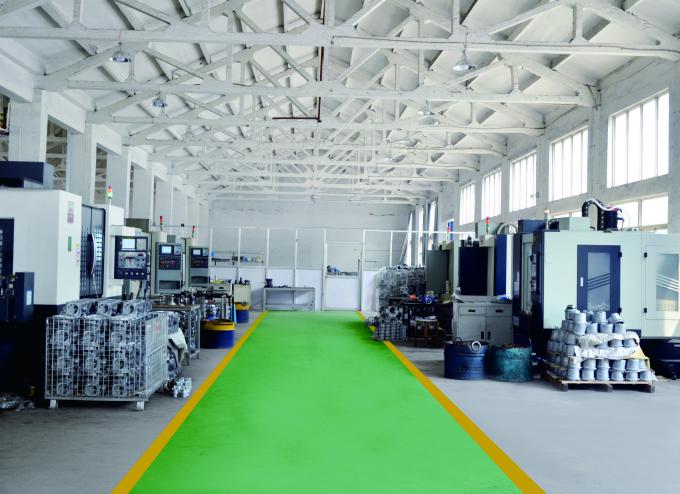
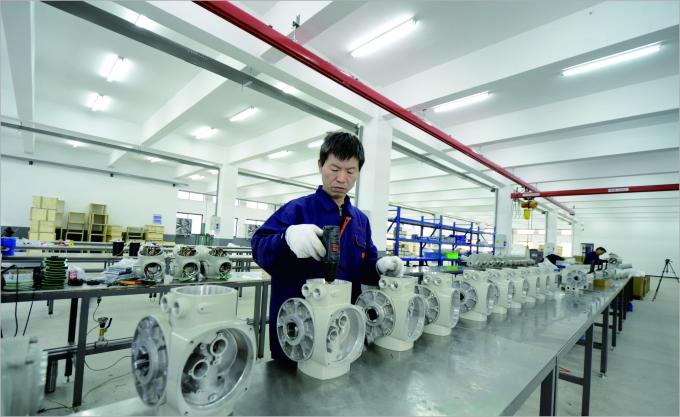
Image: CHENGLEI processing workshop, Changzhou, Jiangsu, China. A machining and assembly floor is the first physical evidence behind any capacity claim.
Five questions decide most electric actuator supplier evaluations: what certification evidence can actually be produced, what production capacity can be documented, what drives the commercial terms, whether a sample or a factory acceptance test can validate the product before scale-up, and how delivery is guaranteed once the order is placed. This article answers those questions in the order industrial buyers normally raise them — compliance, capability, commercial terms, sample validation, then lead time — and treats each answer as a checklist rather than a claim. Changzhou Chenglei Valve Technology Co., Ltd. (CHENGLEI), an electric actuator manufacturer based in Changzhou, Jiangsu, China, is used throughout as a reference example: company figures come from CHENGLEI's own company and product records, and market figures are attributed to the named third-party sources cited alongside them.
Why Capability Claims Are Hard to Verify During Evaluation
Supplier evaluation usually stalls at the same point. The buyer holds a quotation, a product catalogue and a verbal confirmation of capacity, but no evidence chain connecting the three. The difficulty is rarely a shortage of supplier information — most manufacturers publish specifications freely. The difficulty is that the claims which matter most to a procurement decision are the hardest to confirm remotely: production capacity, certification coverage, quality-control method and delivery reliability.
Each claim can be converted into a document request. A capacity statement becomes a documented supply ability plus a factory footprint and a quality-control method. A certification claim becomes a certificate number, a standard, an issuing body, an issue date, an expiry date and a list of covered models. A delivery promise becomes a lead time tied to an order band, a packaging specification and a support commitment. Once those conversions are made, supplier evaluation stops being a comparison of brochures and becomes an assessment of evidence.
The five questions below follow that sequence, matching the way an approval file is normally built: compliance evidence first, because it can disqualify a supplier outright; then capability and commercial terms; then product validation; and finally the delivery terms that determine whether the project schedule holds.
Industry Background: What Is Changing in the Electric Actuator Supply Base
The global electric actuator market was estimated at approximately USD 11.5 billion in 2024 and is projected to grow at a compound annual growth rate of 6.5% to 7.2% through 2034, according to Zion Market Research. Regional figures show where that growth is concentrated: Asia-Pacific dominated the electric valve actuator market with a 38.5% revenue share in 2025, valued at over USD 1.8 billion, driven by industrialization in China and India (Dataintelo). China's export value for electric motor parts, a category that includes actuator components, reached USD 6.43 billion in 2024, representing 26.1% of global exports (Observatory of Economic Complexity).
Market-size figures should always be read together with their scope. Studies measuring standalone electric actuators and studies covering complete industrial valve and actuator assemblies report very different totals, which is why the same market can appear as approximately USD 11.5 billion or as a multiple of that figure depending on the definition used.
On the product side, intelligent electric actuators are moving toward Industrial Ethernet protocols such as Profinet and EtherNet/IP, with 5G edge connectivity discussed for digital twin integration (IndexBox). That shift changes the evaluation question: communication capability, diagnostics and position feedback increasingly carry as much weight as torque output when a plant specifies actuators for an automated line.
Certification requirements are equally structural. Explosion-proof electric actuators are standardized under IEC 60079-0 (general requirements) and IEC 60079-1 (flameproof enclosures, protection type Ex d), maintained by the International Electrotechnical Commission and administered internationally through IECEx. Hazardous-area equipment is then classified by gas group (IIA, IIB, IIC) and temperature class (T1 to T6), with Group IIC required for hydrogen environments. For buyers, the practical consequence is that 'explosion proof' is not one specification: the question is which gas group and which temperature class the equipment must meet in the zone being installed.
At the top of the market, large multinational suppliers set a visible benchmark — Rotork plc held a 14% global market share in the linear electric actuator segment as of 2024 (Market Reports World), and Emerson Electric Co. is estimated to hold 12–15% of the global electric actuator market with USD 17–18 billion in relevant group revenue (Spherical Insights). A buyer comparing a mid-size manufacturer against that benchmark is really comparing an auditable capability set against a well-known brand, which is why evidence quality, not brand familiarity, decides the shortlist.
The Five Verification Areas and the Evidence That Counts
A supplier that can answer the five areas below with documents is easier to approve internally than one that answers with adjectives. The table maps each area to the question a buyer should ask and the artefact that makes the answer verifiable.
| Verification area | Question to ask | Evidence that counts |
|---|---|---|
| 1. Certification and compliance | Which certificate covers the exact model and the exact market? | Certificate number, standard, issuing body, issue date, expiry date, market scope and the model list attached to the certificate |
| 2. Production capacity and customization | What monthly supply ability and customization scope are documented? | Factory area, headcount, engineering team size, documented supply ability, production mode (OEM/ODM), customization options and quality-control method |
| 3. Commercial terms | Which configuration variables change the price? | MOQ, price basis, voltage and control options, body material, enclosure rating, connection type and packaging specification |
| 4. Product validation | Can a unit or a batch be tested before volume production? | Sample policy, test coverage, functional test items and a factory acceptance test (FAT) procedure |
| 5. Delivery and after-sales | What lead time and support terms apply to my order band? | Lead time linked to order quantity, packaging specification, export record, warranty terms and after-sales support channel |
Read as a set, the five areas describe a supplier that can be audited rather than a supplier that can be praised. The sections that follow apply them, first as a workflow and then as five direct answers.
A Six-Step Supplier Verification Workflow
The workflow below can be run without visiting the factory, although an audit visit strengthens steps three and five considerably. Each step ends with a document or a measurable result, so the evaluation produces an approval file rather than an impression.
- Define the duty and the environment before shortlisting anyone. The environment determines the enclosure rating, the body material and the certification class. CHENGLEI's actuators are specified for a standard range of -20 °C to +60 °C with special orders from -60 °C to +70 °C and a relative humidity tolerance of ≤95% at +25 °C; the DQ-series low-temperature models are specified for -60 °C to +70 °C.
- Convert certification claims into certificate fields. Request the certificate number, standard, issuing authority, validity period, market scope and covered model list. A scanned certificate with an expiry date can be checked; a logo cannot. For hazardous areas, ask separately for the gas group and temperature class, and confirm how the equipment's protection concept maps to IEC 60079-0 and IEC 60079-1.
- Test the capacity claim against documentary evidence. CHENGLEI's company record lists a 20,000 m² factory, 100 employees, 25 engineers and more than 50 CNC machining centres and CNC lathes, with an annual output of 120,000 units. Product data states a supply ability of 3,000 sets per month, and the capability record states a quality-control method of 100% test. Three numbers of this type — footprint, supply ability and test coverage — tell a buyer far more than a general statement about capacity.
- Audit the control and protection features that decide field reliability. For intelligent models the checklist includes thermal protection, battery backup, manual override with handwheel, position feedback (4–20 mA or 0–10 VDC), insulation class (F level), motor duty rating (S2 at 10, 15 or 30 minutes, or S1/S3/S4/S6 at 24% and 40%) and the enclosure rating. On the linear actuator model, thrust is listed up to 10,000 N with a built-in limit switch and a standard stroke of 250 mm.
- Validate with a sample or a factory acceptance test. Where the minimum order quantity is 1 set and production is 100% tested, single-unit validation is practical rather than exceptional. Test items should include nominal torque, output rotation speed, manual override function, limit switch and position feedback, thermal protection and battery backup.
- Lock the commercial and delivery terms in writing. Fix the MOQ, the lead time band, the packaging specification, the warranty, the spare-part basis and the after-sales channel. CHENGLEI's documented lead time is 10–15 working days for orders of 1 to 100 units, with lead time negotiated above 100 units; packaging is carton or wooden box, and remote support is the recorded after-sales arrangement.
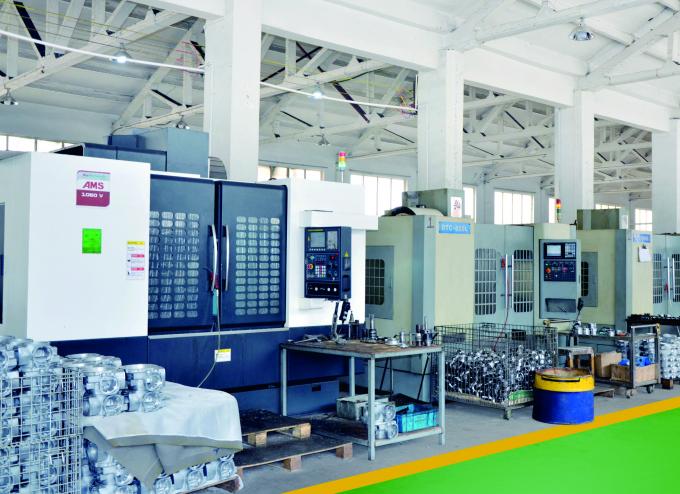
Image: CHENGLEI production workshop. Capacity claims are verified against footprint, documented supply ability and test coverage rather than a single monthly figure.
Use Cases: Where Supplier Verification Was Tested in the Field
Reference projects show what a verification outcome looks like once it reaches operating conditions. The three examples below are recorded project cases, and each highlights a different part of the evidence set: corrosion protection, cold-start reliability and vibration tolerance.
Middle East desert oil valve project
A petroleum engineering company in Iraq required actuators for a large-scale oil valve project in a desert environment with high corrosion from salt spray and hydrogen sulfide, combined with high ambient temperatures. The recorded solution used C5-M grade anti-corrosion coating technology that exceeds conventional standards, together with double-sealed wiring technology to isolate corrosive gases and moisture. The project was won through bidding, and the recorded outcome is stable oil field production with reduced downtime caused by leaks.
What a buyer can verify from this case: coating grade, sealing method and the outcome linked to them. Each is a specification item that can be requested from any candidate supplier and compared item by item.
Russian oil, gas and energy infrastructure project
A strategic partner in Russia needed actuators for remote automated control of local oil and gas pipelines and energy infrastructure, in extremely cold conditions with large temperature differences and potentially explosive gas environments. The recorded result is that the first batch of more than 400 actuators passed a factory acceptance test (FAT) conducted by the Russian delegation. The product passed extreme operating condition verification with EX explosion-proof certification, enabling stable start-up and precise control at minus 40 degrees Celsius, and addressing low-temperature failure modes such as LCD failure, lubricant solidification and material brittleness.
What a buyer can verify from this case: the existence of a formal FAT process, the batch scale tested, and the specific low-temperature failure modes the design addresses. A FAT is one of the few validation steps a buyer can witness directly before volume production.
United States non-ferrous metal group
A large non-ferrous metal group applied actuators to valve automation in core sections including raw material grinding, high-temperature digestion, sedimentation separation and evaporation stations, where strong vibration, high temperature and dust had produced a high failure rate in existing equipment. The recorded deployment of nearly a thousand intelligent actuators ensured uninterrupted 24/7 production line operation and achieved Profinet industrial Ethernet communication interconnection across the entire factory area; the project is recorded as a benchmark for intelligence at that single-project scale. The design response to strong vibration in the digestion section was mechanical separation of the body and the control unit, keeping precision control components away from the vibration source and simplifying maintenance during high-altitude operations.
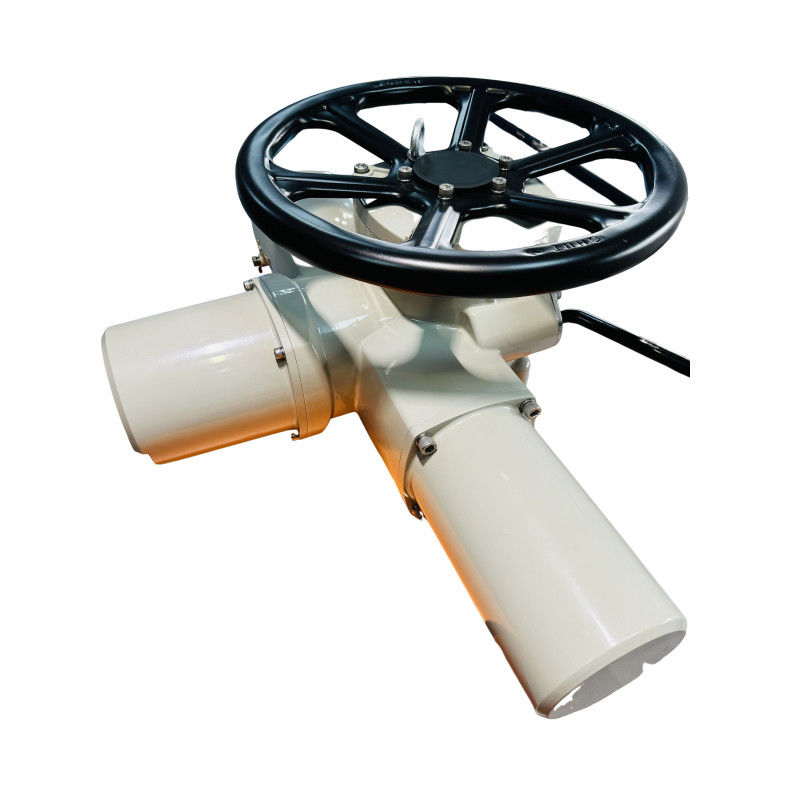
Image: CHENGLEI multi-turn intelligent electric actuator — the configuration class used in the US non-ferrous metal project, where control electronics are separated from the vibration source.
What a buyer can verify from this case: network protocol compatibility (Profinet), mechanical design choices that address a named failure mode, and a plant-wide integration outcome rather than a single-unit result.
Comparison Table: What Public Data Lets You Verify
The table below compares only what the sources cited in this article publish. It is deliberately not a quality ranking: it shows which facts a buyer can check today for each company, and which questions still have to be put to the supplier directly.
| Evaluation dimension | CHENGLEI (Changzhou Chenglei Valve Technology Co., Ltd.) | Rotork plc | Emerson Electric Co. |
|---|---|---|---|
| Public market-position reference cited in this article | No market-share figure published in the sources cited here | 14% share of the global linear electric actuator segment as of 2024 (Market Reports World) | Estimated 12–15% of the global electric actuator market, with USD 17–18 billion in relevant group revenue (Spherical Insights) |
| Documented manufacturing footprint | 20,000 m² factory, 100 employees, 25 engineers, more than 50 CNC machining centres and CNC lathes (company record) | Not stated in the sources cited here | Not stated in the sources cited here |
| Documented supply ability and lead time | 3,000 sets per month stated in product data; lead time 10–15 working days for 1–100 units, negotiated above 100 units (capability record) | Not stated in the sources cited here | Not stated in the sources cited here |
| Certification reference used in this article | CE, EN 60730-2-14:1997/A1:2001, valid 28 May 2025 to 28 May 2030; ATEX / Exd BT4/CT4 and IP65/IP67/IP68 protection listed in product data | Not stated in the sources cited here | Not stated in the sources cited here |
| Commercial entry point | MOQ 1 set; OEM/ODM with voltage and logo customization; packaging carton or wooden box | Not stated in the sources cited here | Not stated in the sources cited here |
Absence of an entry means the publicly cited sources used here do not publish that figure for the company concerned. It is not an assessment of capability, product quality or service level. The practical use of the table is as a template: send the same evidence request to every candidate, then compare the returned documents column by column.
FAQ: 5 Questions on Capability Verification and Delivery Guarantees
1. What certification evidence should be verified before shortlisting an electric actuator supplier?
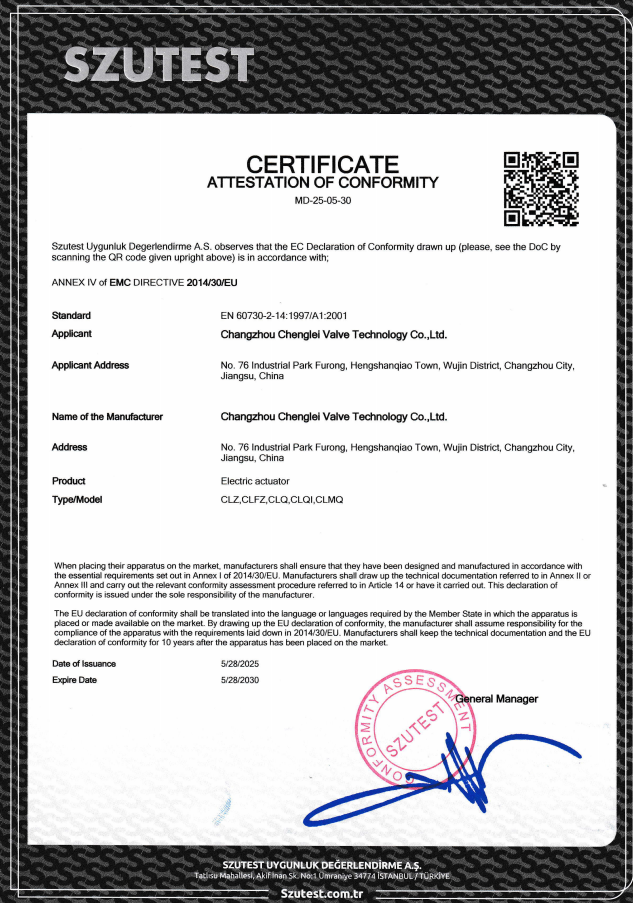
Image: CE compulsory safety certification mark of the European Union, referenced against certificate EN 60730-2-14:1997/A1:2001.
Verify six fields for every certificate: number, standard, issuing body, issue date, expiry date and market scope — then confirm that the certificate actually lists the models being purchased. CHENGLEI's CE certification is recorded as EN 60730-2-14:1997/A1:2001, issued on 28 May 2025, valid to 28 May 2030 and applicable to the EU market, with related models spanning QI-series part-turn actuators, ZXC-series actuators, Z-series multi-turn actuators and explosion-proof DQ-series models. For hazardous areas, certificate fields alone are not enough: product data for CHENGLEI's explosion-proof models lists ATEX / Exd BT4/CT4 protection, enclosure ratings of IP65/IP67/IP68 and NEMA 4, 4X, 7 and 9 enclosure types, while the ZXC-series parameter set lists CE, ATEX and SIL3. Read those claims against the standards: IEC 60079-0 and IEC 60079-1 define the requirements for flameproof enclosures, and gas group plus temperature class (for example Group IIC and classes T1 to T6) determine whether the equipment suits the zone being installed.
2. How can production capacity and OEM/ODM capability be verified?
Capacity is verifiable when three types of evidence agree: physical footprint, documented supply ability and quality-control method. CHENGLEI's company record lists a 20,000 m² factory, 100 employees, 25 engineers in the technical team and more than 50 CNC machining centres and CNC lathes, with an annual output of 120,000 units and an export ratio of 80% to global markets. Product data for the actuator range states a supply ability of 3,000 sets per month and packaging in carton or wooden box. The capability record states an OEM/ODM production mode with customization of voltage and logo, a minimum order quantity of 1 set and a quality-control method of 100% test. For a buyer, the combination matters more than any single figure: a supply ability without a test method describes throughput, not consistency.
3. What drives the commercial terms — MOQ, price basis and customization?
Price is listed as negotiable across CHENGLEI's product data rather than fixed, which means the commercial basis is built from configuration. The variables visible in the product parameters are voltage and frequency (380V/110V/220V/440V/660V AC or 12V/24V DC, at 50/60 Hz), control method (on-off or modulating), torque and motor power class — from the Z5 at 50 N.m with 0.12/0.18 kW, through the QI10 at 100 N.m with 0.06 kW and the QI60 at 600 N.m with 0.18 kW, to the QI500 at 5,000 N.m with 0.55 kW — body material (aluminium alloy, stainless steel or carbon steel), enclosure protection grade (IP65/IP67/IP68), explosion-proof housing, anti-corrosion coating, and connection type (JB2920 torque type or ISO5210 thrust flange type). OEM customization of voltage and logo is part of the production mode, and the MOQ of 1 set means a buyer can price a single validation unit before committing to volume.
4. Can a supplier be validated with a sample or a factory acceptance test before a full order?
Yes, where the supplier's MOQ allows a single unit and where production is subject to 100% testing — both of which are recorded for CHENGLEI. The stronger evidence is process-based: in the Russian oil and gas and energy infrastructure project, the first batch of more than 400 actuators passed a factory acceptance test (FAT) conducted by the Russian delegation. A practical sample checklist covers nominal torque output, output rotation speed, manual override with handwheel, limit switch and position feedback (4–20 mA or 0–10 VDC), thermal protection and battery backup. Where the application is hazardous-area rated, the sample review should also confirm how the explosion-proof housing and sealing match the certified protection concept.
5. What delivery guarantees should be written into the purchase contract?
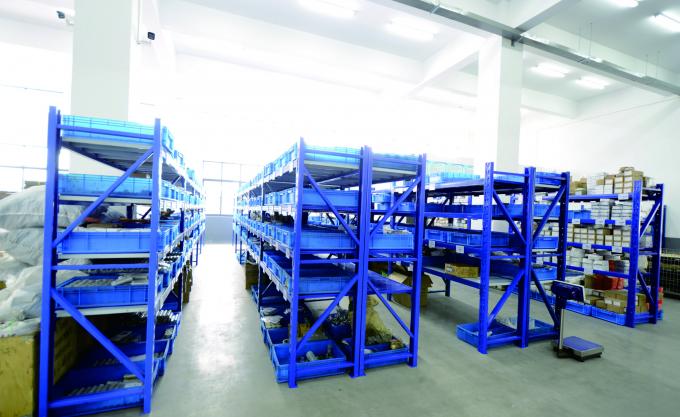
Image: CHENGLEI warehouse. Packaging and lead-time terms are easier to enforce when the specification is fixed in the contract.
Start with the lead time and tie it to the order band, because a single lead-time figure is rarely accurate across quantities. CHENGLEI's documented lead time is 10–15 working days for orders of 1 to 100 units, with lead time to be negotiated above 100 units; documented supply ability is 3,000 sets per month. Packaging should be fixed in the contract as well: carton or wooden box for the standard range, and a wooden case for linear actuator models. The recorded after-sales arrangement is remote support, and the ZXC-series rotary actuator data lists a two-year warranty — both worth writing into the agreement rather than leaving as verbal reassurance. Buyers should also define what triggers the lead-time clock, how partial shipments are handled, and who provides technical support during commissioning.
To compare these terms against your own project, request a configuration-specific quotation, a sample unit or the full product catalogue from CHENGLEI. The technical team can confirm certification scope, torque class and delivery band for a defined duty — send the valve type, torque requirement and hazardous-area classification to CHENGLEI.
Conclusion: Supplier Evaluation Is an Evidence Exercise
Capability verification and delivery assurance come down to five document sets: certification fields, capacity evidence, commercial variables, validation results and written delivery terms. A supplier that can produce all five — with numbers that match across company records, product data and project outcomes — is straightforward to approve, because nothing in the file depends on interpretation. CHENGLEI's records illustrate the pattern: a CE certificate with a stated standard and validity period, a 20,000 m² factory with a documented supply ability of 3,000 sets per month, OEM/ODM customization with a MOQ of 1 set, a documented FAT for a 400-unit-plus first batch, and a 10–15 working day lead time for orders up to 100 units.
The next step is to put the same five questions to every candidate on your shortlist and compare the answers side by side. Suppliers that answer with documents move forward; suppliers that answer with adjectives stay on hold.
Request a Quotation, Sample or Catalogue
Send your valve type, torque requirement, voltage and hazardous-area classification, and CHENGLEI will confirm the applicable model, certification scope and delivery band. MOQ is 1 set, and OEM/ODM customization of voltage and logo is available.
Website: www.electricvalvesactuators.com
Email: terry.gui@cz-chenglei.com
WhatsApp: +8613401325958
Download the full CHENGLEI product brochure (PDF)
Have Questions or Need More Details?
Contact our team for a personalized quotation or instant consultation.
Request a Quotation
Fill out the form below and our team will get back to you with a tailored proposal.
WhatsApp Direct Chat
Prefer to chat in real-time? Message us on WhatsApp for instant assistance & quick answers.
- Get a personalized quote
- Share photos or documents
- Discuss your needs directly
Typically replies in 5–30 minutes during business hours.