
Top 5 Electric Actuator Configurations for Heavy-Duty Industrial Duty Cycles
Heavy-duty duty cycles are not defined by valve size. They are defined by how often the valve moves, how long each movement lasts, what the actuator housing must survive, and how the actuator is mechanically joined to the valve stem. Two actuators carrying the same nominal torque can deliver very different service life, because one was ordered with an S2 ten-minute motor duty for a valve that strokes continuously, while the other was matched to the real cycling profile.
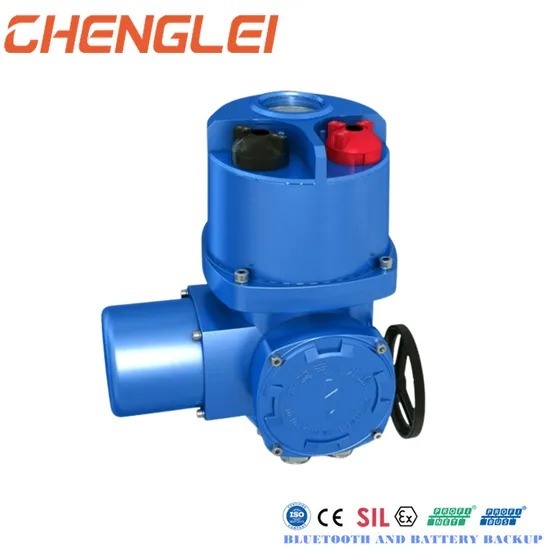
This article lists five electric actuator configurations that CHENGLEI builds for demanding duty cycles. Each configuration combines three decisions that should be made together: motor duty class (S2 10, 15 or 30 minutes, or S1/S3/S4/S6 at 24% and 40%), body material (aluminum alloy, stainless steel or carbon steel), and connection interface (JB2920 torque type or ISO5210 thrust flange type). Where the CLZXC4000 intelligent adjustment electric valve actuator platform, battery backup, thermal protection or the manual override handwheel changes the outcome on site, the entry explains why.
Why most heavy-duty actuator problems start with a mismatched configuration
Four mismatches account for most field failures in demanding duty cycles, and all four are decided at the specification stage rather than on the plant floor.
- Motor duty class versus the real cycle profile. The CLZXC4000 intelligent adjustment electric valve actuator is listed with a working system of 10 minutes for short time, while the wider CLZXC4000 configuration family is listed with motor duty options of S2 10 min, 15 min or 30 min, or S1/S3/S4/S6 at 24% and 40%. Selecting a short-time class for a modulating loop that strokes every few minutes means the duty class is exceeded long before the valve reaches its own design life.
- Body material versus environment. Outdoor installations in coastal, desert or chemical atmospheres combine salt spray, hydrogen sulphide, humidity and temperature swing. The listed body material options on the platform are aluminum alloy, stainless steel or carbon steel, and the listed anti-corrosion treatment on the CLZXC4000 platform is high temperature baking paint.
- Connection interface versus valve stem. A JB2920 torque type connection transmits rotary torque to a quarter-turn stem. An ISO5210 (GB/T 12222) thrust flange type connection is used where the actuator delivers linear thrust. Choosing the wrong interface usually ends in adapter plates, alignment work and torque losses that were never part of the original calculation.
- Missing fail-safe layer. Thermal protection, battery backup and a manual override handwheel are configuration decisions, not afterthoughts. All three are listed as available on the CLZXC4000 platform, and all three change how a plant reacts to a power interruption or a jammed valve.
Industrial context: demand, duty classes and hazardous-area rules
The global electric actuator market was estimated at approximately USD 11.5 billion in 2024 and is projected to grow at a CAGR of 6.5% to 7.2% through 2034, according to Zion Market Research. Dataintelo reports that Asia Pacific dominated the electric valve actuator market with a 38.5% revenue share in 2025, valued at over USD 1.8 billion. On the supply side, the Observatory of Economic Complexity records China's export value for electric motor parts, including actuator components, at USD 6.43 billion in 2024, or 26.1% of global exports.
In industrial motor practice, duty types are commonly described as S1 (continuous duty), S2 (short-time duty), S3 (intermittent periodic duty), S4 (intermittent periodic duty with starting) and S6 (continuous-operation periodic duty). Buyers therefore read a duty class as a statement about how long the motor may run and how often it may restart, not as a statement about torque.
For hazardous areas, IEC 60079-0 (General Requirements) and IEC 60079-1 (Flameproof Enclosures d) are the reference standards for explosion-proof electric actuators. Explosion-proof actuators are classified into gas groups IIA, IIB and IIC and temperature classes T1 to T6, and Group IIC is required for hydrogen environments. This distinction matters because the CHENGLEI specification lists explosion proof as ATEX / Exd BT4/CT4 on the CLZXC4000, DQ Series and ZXC-type platforms, while the documented industrial application requirement for oil and gas pipeline valve control is stated as Ex d IIB T4 with IP65/IP67 protection.
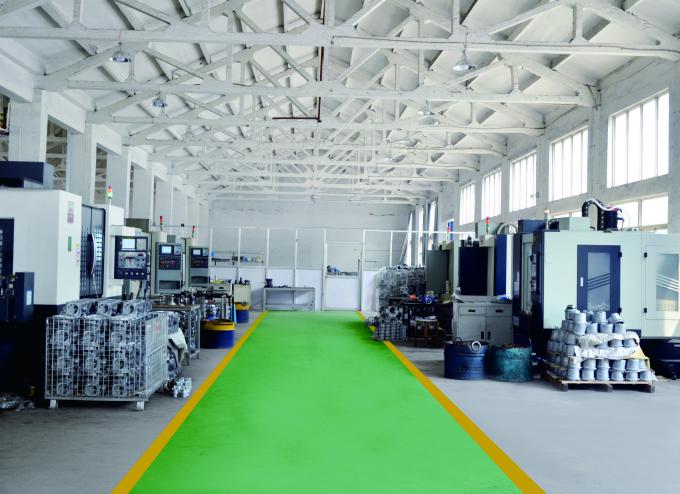
Changzhou Chenglei Valve Technology Co., Ltd. (CHENGLEI) is a valve electric actuator manufacturer based in Changzhou, Jiangsu, China, operating a 20,000 m2 facility with approximately 100 employees, 25 R&D engineers and more than 50 CNC machining centres. The company has been developing and manufacturing valve electric actuators for 20 years, produces about 120,000 units annually, exports around 80% of output to global markets, and applies its CL series actuators in Oil & Gas, Water & Power, and Chemical, Process & Industrial applications.
The five configurations in detail
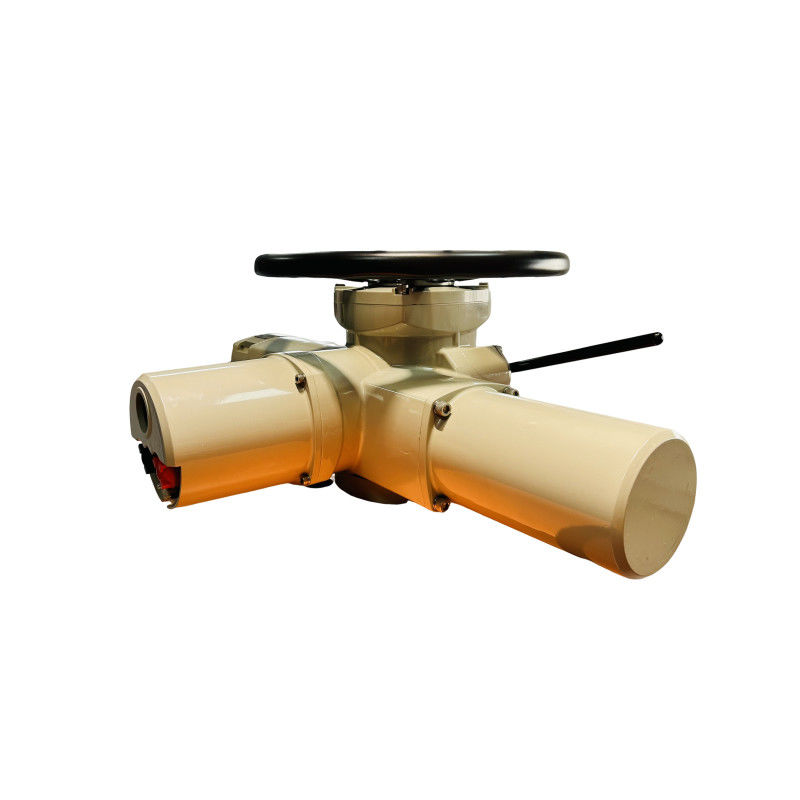
Configuration 1 - S2 10-minute short-time duty, aluminum alloy body, JB2920 torque connection
This is the configuration for intermittent quarter-turn isolation duty: ball valves, butterfly valves and general isolation valves in water distribution and power plant cooling circuits that are cycled a limited number of times per day and hold position between moves. The CLZXC4000 platform is specified with a 10-minute short-time working system, a protection level of IP65/IP67, a working temperature of -20 to +60 degrees C, a rated frequency of 50/60 Hz, and a high temperature baking paint anti-corrosion coating.
Within this duty band, the part-turn family covers the torque range from light to heavy: QI10 at 100 N.m nominal torque with 0.06 kW motor power, a 60:1 manual speed ratio, a maximum stem diameter of 19 mm and F05/F07 flange; QI15 at 150 N.m with 0.075 kW and the same 60:1 manual ratio; and QI60 at 600 N.m with 0.18 kW motor power, an 87:1 manual speed ratio, a maximum stem diameter of 38 mm and F10/F12 flange.
An aluminum alloy body is the practical starting point here because the aluminum alloy option keeps housing weight low across the smaller F05/F07 to F10/F12 mounting sizes, and the JB2920 torque type connection transfers rotary torque directly through a quarter-turn interface instead of through an adapter stack. The boundary condition is clear: an S2 short-time rating is not a continuous modulating rating. If the same valve must modulate all day, move up to Configuration 3 or 5 rather than derate the plant expectation.
Configuration 2 - S2 15/30-minute duty, carbon steel body, ISO5210 thrust flange connection
Straight-stroke regulating valves do not consume torque the way quarter-turn valves do; they consume thrust. The ZXC intelligent linear actuator configuration is listed with a maximum thrust of 10,000 N, a standard stroke of 250 mm, a stroke length of 100 mm, built-in limit switch, IP65 rating, 24 VDC operation with 220V/380V 50 Hz power supply options, thermal protection, explosion proof construction, battery backup and Bluetooth connection.
For this configuration, the ISO5210 (GB/T 12222) thrust flange type connection is the correct interface, because it is designed to transfer linear thrust into the valve stem rather than rotary torque into a quarter-turn coupling. Extended S2 duty at 15 or 30 minutes is listed as an option on the platform, which suits throttling movements that take longer than a simple open/close stroke. A carbon steel body is the option to consider when mechanical rigidity and mass stability under thrust load are the deciding factors, while aluminum alloy and stainless steel remain the alternative listed material options.
Configuration 3 - S1/S3/S4/S6 high-cycle modulating duty, stainless steel body, ATEX Exd BT4/CT4
This configuration targets hazardous-area service where the actuator strokes frequently or modulates continuously: oil and gas facilities, chemical and petrochemical plants, and outdoor pipeline stations running 24/7. The platform lists motor duty of S1/S3/S4/S6 at 24% and 40%, control method as on-off or modulating, protection grade IP65/IP67/IP68, insulation class F, ambient temperature -20 to +60 degrees C with special orders covering -60 to +70 degrees C, and relative humidity up to 95% at +25 degrees C. Explosion proof is listed as ATEX / Exd BT4/CT4 with a 4-20 mA signal input, battery backup, thermal protection, Bluetooth connection and manual override with handwheel.
Where the valve needs high breakaway torque in a quarter-turn body, the QI500 configuration lists 5000 N.m nominal torque, an output rotation speed of 0.5 r/min, a 0.55 kW motor, 2.5 A rated current, a 348:1 manual speed ratio, a maximum stem diameter of 55 mm, a reference weight of 35 kg and an F14/F16 flange with an explosion-proof housing.
The field evidence for this configuration comes from a Middle East project: a petroleum engineering company in Iraq ordered 200 sets for a large-scale oil valve project in a desert environment with high corrosion from salt spray and hydrogen sulphide and high ambient temperature. CHENGLEI applied a C5-M grade anti-corrosion coating plus double-sealed wiring technology to isolate corrosive gas and moisture intrusion. The documented result, over a six-year relationship, was stable oilfield production with reduced maintenance downtime caused by leaks.
Compliance check before ordering: the listed explosion-proof class on the CHENGLEI platform is Exd BT4/CT4. Where the process gas calls for Group IIC or a different temperature class, verify the certificate against the zone classification rather than assuming equivalence between BT4 and CT4 ratings.
Configuration 4 - Low-temperature pipeline duty, aluminum alloy body, flanged connection
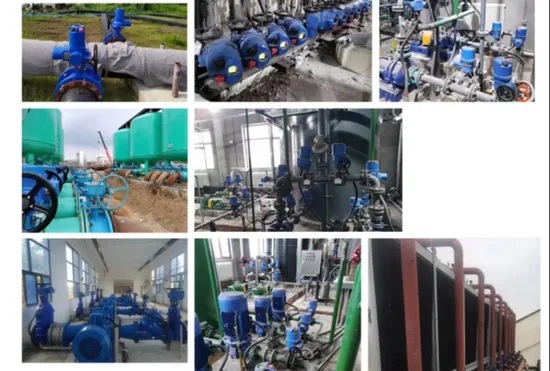
Cold-climate pipelines and energy infrastructure need a configuration that starts reliably after a long cold soak. The DQ Series is listed with an operating temperature range of -60 degrees C to +70 degrees C, flange connection type, aluminum alloy body material, voltage options of 380V/110V/220V/440V/660V AC or 12V/24V DC, 50/60 Hz rated frequency, on-off or modulating control, 4-20 mA signal input, motor duty of S2 10/15/30 min or S1/S3/S4/S6 at 24% and 40%, protection grade IP65/IP67/IP68, insulation class F, enclosure type NEMA 4/4X/7&9, relative humidity up to 95% at +25 degrees C, and explosion proof ATEX / Exd BT4/CT4 with Bluetooth connection.
The related case record describes CHENGLEI supplying a Russian strategic partner in the oil, natural gas and energy infrastructure sector with 400 sets for remote automated control of local pipelines. The first batch of more than 400 high-end intelligent electric actuators passed a factory acceptance test conducted by the Russian delegation. The product held EX explosion-proof certification and was verified to start stably and control precisely at minus 40 degrees C, addressing the industry pain points of LCD failure, lubricant solidification and material brittleness at low temperatures.
Note the distinction between standard and special temperature capability on the wider platform: the standard listing covers -20 to +60 degrees C, while the -60 to +70 degrees C range is quoted as a special order on the CLZXC4000 configuration family. Buyers specifying for arctic or sub-arctic sites should confirm which range the selected model actually carries.
Configuration 5 - Vibration-decoupled continuous duty with Industrial Ethernet integration
The hardest duty cycle is not the coldest or the most explosive; it is the one where the actuator is mounted next to a machine that never stops shaking. In a documented project for a large non-ferrous metal group in the United States, 200 sets were applied to valve control in raw material grinding, high-temperature digestion, sedimentation separation and evaporation stations, where the site environment combined strong vibration, high temperature and dust and the existing equipment carried a high failure rate.
The configuration answer was a design that separates the mechanical body from the control unit, keeping the precision control section away from the vibration source. This also simplified maintenance during high-altitude operations. The deployment covered continuous 24/7 operation of the production line and delivered Profinet industrial Ethernet communication interconnection across the plant area, supporting the site's position as a benchmark intelligent-manufacturing project.
For duty class and hardware, this profile belongs in the S1 continuous or S1/S3/S4/S6 at 24% and 40% band rather than in a short-time class, with body material chosen from the listed aluminum alloy, stainless steel or carbon steel options and connection defined by the valve and mounting conditions. The supporting multi-turn intelligent units in this family include the Z5 at 50 N.m with 18/24 r/min output speed, the Z10 at 100 N.m, the Z30 at 300 N.m with F14 flange and 40 mm maximum stem diameter, and the Z45 at 450 N.m with F16 flange and 48 mm maximum stem diameter. Thermal protection is listed across these multi-turn units, and the Z-series multi-turn actuators provide manual override by handwheel.
This configuration direction is consistent with a wider market trend: intelligent electric actuators are shifting toward Industrial Ethernet protocols such as Profinet and EtherNet/IP and toward 5G edge connectivity for digital twin integration, as noted in IndexBox market analysis.
Step-by-step breakdown: how to specify a heavy-duty configuration
The five configurations above are not a menu to pick from by preference. They are outputs of a short specification sequence.
- Step 1 - Record the real cycle profile. Count strokes per day, measure stroke duration, note whether the valve modulates or only opens and closes, and confirm whether operation is 24/7 or intermittent. The reviewed industrial application profile for these actuators lists continuous 24/7 operation across high temperature, high pressure, explosion-proof, corrosion-resistant, dust-proof and outdoor conditions.
- Step 2 - Classify the area and the environment. Establish explosion-proof class (ATEX / Exd BT4/CT4 as listed, or a higher group and temperature class if the process demands it), ingress protection level (IP65, IP67 or IP68), ambient temperature range (-20 to +60 degrees C standard, -60 to +70 degrees C as a special order) and humidity exposure (up to 95% at +25 degrees C as listed).
- Step 3 - Choose the motor duty class. S2 10 minutes for intermittent quarter-turn isolation, S2 15 or 30 minutes for longer linear strokes, and S1/S3/S4/S6 at 24% or 40% where the actuator cycles frequently or runs continuously.
- Step 4 - Choose the body material. Aluminum alloy where weight and mounting size dominate, stainless steel where corrosion resistance is the primary constraint, carbon steel where rigidity under load matters most. All three are listed options on the platform.
- Step 5 - Choose the connection interface and flange. JB2920 torque type for quarter-turn valves, ISO5210 (GB/T 12222) thrust flange type for linear thrust duty. Then confirm the flange size and stem limit against the valve: F05/F07 with 19 mm maximum stem, F10/F12 with 38 mm, F14/F16 with 55 mm.
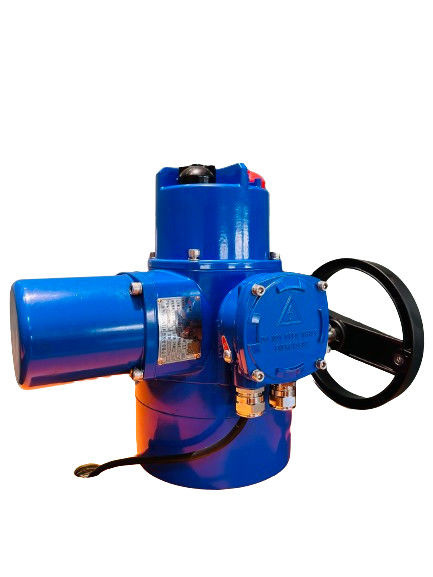
- Step 6 - Define the fail-safe layer. Confirm thermal protection, battery backup, manual override by handwheel and, where useful, Bluetooth local connection. On explosion-proof units, battery backup must be specified together with the correct explosion-proof class rather than added later.
- Step 7 - Validate with a sample before the project order. CHENGLEI operates a minimum order quantity of 1 set with 100% test quality control, OEM/ODM support for voltage and logo, and packaging in carton or wooden box.
Use cases: which configuration fits which plant
- Water and power generation. Configuration 1. Intermittent isolation on ball, butterfly and control valves, indoor or sheltered outdoor mounting, non-hazardous area, IP65/IP67 protection.
- Process plants with linear control valves. Configuration 2. Straight-stroke regulating duty where thrust up to 10,000 N and strokes up to 250 mm are required, with thermal protection on the motor.
- Oil and gas, chemical and petrochemical. Configuration 3. Modulating or high-cycle on-off duty in hazardous areas, outdoor installation, corrosive atmosphere, IP65/IP67/IP68 and ATEX / Exd BT4/CT4.
- Cold-climate pipelines and energy infrastructure. Configuration 4. Remote automated pipeline control with verified starting and control performance at minus 40 degrees C and an operating range extending to -60 degrees C.
- Metallurgy, alumina and heavy process lines. Configuration 5. Continuous 24/7 operation with strong vibration, high temperature and dust, where separating the control unit from the mechanical body protects the precision control section and Industrial Ethernet integration connects the actuators to the plant control layer.
Comparison table: five configurations side by side
| # | Configuration | Motor duty (as listed) | Body material | Connection | Protection & explosion proof | Designed for |
|---|---|---|---|---|---|---|
| 1 | Short-time quarter-turn isolation | S2 10 min | Aluminum alloy | JB2920 torque type | IP65/IP67; ATEX / Exd BT4/CT4 available | Intermittent on/off isolation on ball, butterfly and control valves in Water & Power |
| 2 | Extended short-time linear thrust | S2 15 min or 30 min | Carbon steel | ISO5210 (GB/T 12222) thrust flange type | IP65, with IP67/IP68 options; explosion proof available | Straight-stroke regulating valves up to 10,000 N thrust and 250 mm standard stroke |
| 3 | High-cycle modulating in hazardous areas | S1/S3/S4/S6 at 24% or 40% | Stainless steel | JB2920 torque type or ISO5210 thrust flange type | IP65/IP67/IP68; ATEX / Exd BT4/CT4; insulation class F | Oil & Gas, chemical and process plants, outdoor 24/7, corrosive atmosphere |
| 4 | Low-temperature pipeline duty | S2 10/15/30 min or S1/S3/S4/S6 at 24%/40% | Aluminum alloy | Flange | IP65/IP67/IP68; NEMA 4/4X/7&9; ATEX / Exd BT4/CT4 | Cold-climate oil, gas and energy infrastructure down to -60 degrees C |
| 5 | Vibration-decoupled continuous operation | S1 continuous / S1-S3-S4-S6 at 24% or 40% | Selected from aluminum alloy, stainless steel or carbon steel platform options | Defined by the valve and mounting; control unit separated from the mechanical body | Thermal protection, battery backup, manual override handwheel; Industrial Ethernet integration | Alumina, metallurgical and heavy process lines with strong vibration, high temperature and dust |
Read the table as a filter, not as a catalogue. Configuration 1 fails if it is used for continuous modulating duty. Configuration 3 is over-specified for a sheltered, non-hazardous isolation valve. The correct answer is the lowest configuration that still satisfies duty class, environment and interface requirements.
Frequently asked questions
1. Which explosion-proof and ingress-protection ratings should a heavy-duty actuator carry?
The listings on the CHENGLEI CLZXC4000, DQ Series and ZXC-type platforms state explosion proof as ATEX / Exd BT4/CT4, protection grade as IP65/IP67/IP68, insulation class F, ambient temperature -20 to +60 degrees C with special orders from -60 to +70 degrees C, and relative humidity up to 95% at +25 degrees C. The documented industrial requirement for oil and gas pipeline valve control is Ex d IIB T4 with IP65/IP67 protection. IEC 60079-0 and IEC 60079-1 are the reference standards for flameproof enclosures, and actuators are classified into gas groups IIA, IIB and IIC with temperature classes T1 to T6, where Group IIC applies to hydrogen. Match the certificate class to the zone classification before ordering.
2. How do I choose between S2 short-time duty and S1/S3/S4/S6 ratings?
The platform lists S2 10 min, 15 min or 30 min, and S1/S3/S4/S6 at 24% and 40%. The CLZXC4000 intelligent adjustment actuator is listed specifically with a 10-minute short-time working system. Choose the S2 short-time class when the valve is cycled a limited number of times and holds position between moves. Choose S1 or the intermittent S3/S4/S6 ratings when the actuator modulates, cycles frequently, or runs in a 24/7 line. The supporting multi-turn intelligent units Z5, Z10, Z30 and Z45 and the CLZXC4000 configuration family list thermal protection, and battery backup and a manual override handwheel are listed on the platform, which keeps the valve operable if main power is interrupted.
3. What drives the cost of a heavy-duty actuator configuration?
Prices are listed as negotiable and quoted per project, so the honest answer is that the configuration matrix, not the model label, determines the quotation. The cost drivers visible in the specification are motor duty class, body material (aluminum alloy versus stainless steel versus carbon steel), explosion-proof class (ATEX / Exd BT4/CT4), protection grade (IP65 versus IP67 versus IP68), control method (on-off versus modulating), connection interface (JB2920 torque type versus ISO5210 thrust flange type), flange size and maximum stem diameter, and options such as battery backup, Bluetooth connection and a special low-temperature range. A stainless steel S1/S3/S4/S6 unit with explosion-proof certification and battery backup is a different commercial object from an aluminum alloy S2 IP65 unit, even when both carry the same torque figure.
4. Can I validate a configuration before ordering a full project batch?
Yes. CHENGLEI operates a minimum order quantity of 1 set, applies 100% test quality control, and ships in carton or wooden box packaging. OEM/ODM production is available with customization of voltage and logo, which allows a project to confirm the interface, duty class and control behaviour on a single actuator before committing to a plant-wide order. A 2-year warranty is listed on the ESA/ZXC-type electric rotary actuator configuration.
5. What is the lead time, and how does a project start?
The listed lead time is 10 to 15 working days for orders of 1 to 100 units, with larger orders quoted on a negotiated schedule against a monthly capacity of 8,000 units. Production is supported by a 20,000 m2 facility, more than 50 CNC machining centres and an annual output of about 120,000 units, and after-sales support is provided remotely across global export markets. To start, send the valve type, required torque or thrust, stroke or quarter-turn requirement, ambient and hazardous-area conditions, and the preferred connection interface. Request a configuration review, sample or quotation through CHENGLEI's official site, and download the full electric actuator product brochure (PDF) for the complete specification set.
Conclusion: match the configuration, not just the torque
Heavy-duty duty cycles reward buyers who specify three things together: a motor duty class that matches the real cycling profile, a body material that matches the environment, and a connection interface that matches the valve stem. The five configurations above cover intermittent quarter-turn isolation, extended short-time linear thrust, high-cycle modulating service in hazardous areas, low-temperature pipeline duty and vibration-decoupled continuous operation, and each one can be assembled from CLZXC4000 platform options rather than from custom engineering.
The evidence that this approach works is documented rather than claimed: 200 sets in a Middle East desert oil valve project with C5-M coating and double-sealed wiring, 400 sets in a Russian pipeline project verified to start at minus 40 degrees C, and 200 sets in a US alumina plant where separating the control unit from the mechanical body solved a vibration-driven failure pattern and connected the plant over Profinet.
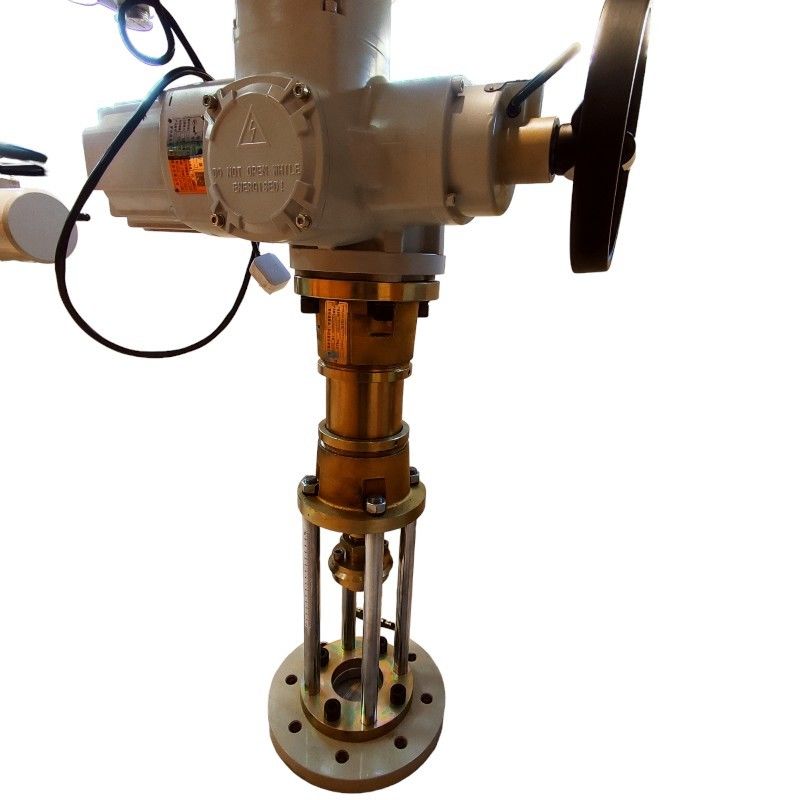
Next step: confirm your duty cycle with CHENGLEI
Send the valve type, torque or thrust requirement, ambient temperature, hazardous-area classification and connection interface. The configuration review returns a matched duty class, body material and connection, together with sample and quotation terms. Minimum order quantity is 1 set, quality control is 100% test, and standard lead time is 10 to 15 working days for 1 to 100 units.
Request a sample or quotation at electricvalvesactuators.com and download the CHENGLEI electric actuator catalogue (PDF).
Have Questions or Need More Details?
Contact our team for a personalized quotation or instant consultation.
Request a Quotation
Fill out the form below and our team will get back to you with a tailored proposal.
WhatsApp Direct Chat
Prefer to chat in real-time? Message us on WhatsApp for instant assistance & quick answers.
- Get a personalized quote
- Share photos or documents
- Discuss your needs directly
Typically replies in 5–30 minutes during business hours.