
On-Off vs Modulating Electric Actuators: Which Control Method Fits Your Process?
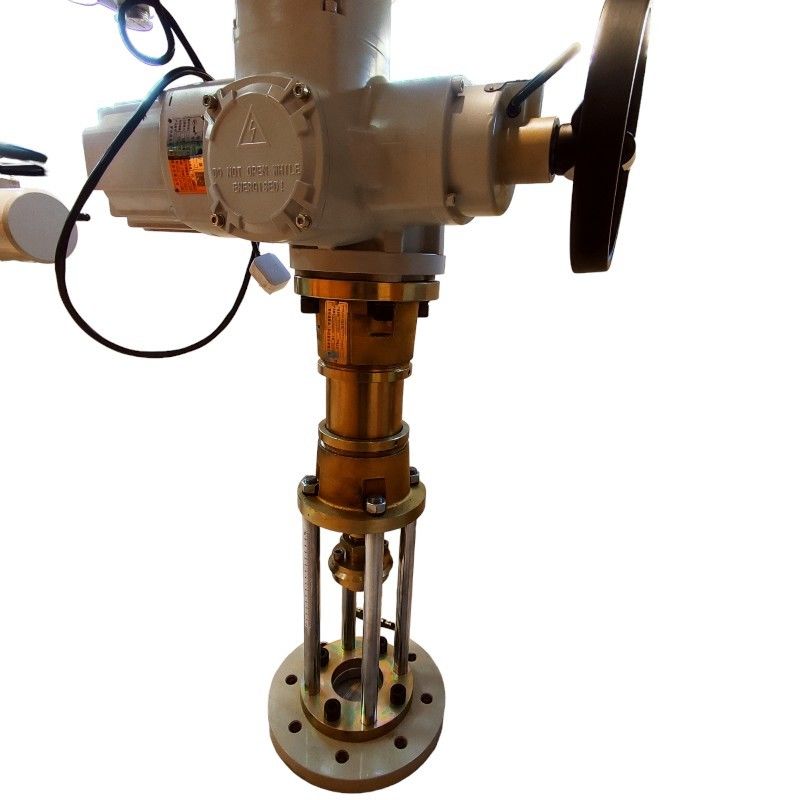
Short answer: specify on-off control when the valve only has to be fully open or fully closed, and specify modulating control when the valve has to stop somewhere between those two positions and hold a setpoint for pressure, flow, level or temperature. In Chenglei configurations such as the CLZXC4000 Intelligent Adjustment Electric Valve Actuator, the DQ Series and the ZXC Series, Control Method: On-Off or Modulating is a specification line selected per project, next to rated voltage, motor duty, protection class and hazardous-area certification.
On-off and modulating are not competing features on an electric actuator. They are two different answers to one question: what is the process asking the valve to do? A specification that answers that question correctly once is cheaper than a specification that is corrected at commissioning — or worse, discovered by an operator when a loop will not stabilise.
This article compares the two control methods on the criteria that decide a purchase: what the valve does, which signal the control system sends, how hard the motor works, and which mechanical, electrical and safety parameters stay identical either way. The comparison is grounded in published Chenglei product configurations rather than generic descriptions.
Problem Definition: What Actually Changes Between On-Off and Modulating
Control method describes what the actuator does with the valve after it receives a command. The difference appears in three places, and only in three places.
- Command type. An on-off actuator receives a discrete command — open or close. A modulating actuator receives a continuous command that represents a position between fully closed and fully open. Chenglei lists a 4–20 mA signal input on modulating-capable platforms such as the DQ Series.
- Position holding. An on-off unit finishes its stroke at an end position. A modulating unit must be able to stop at an intermediate position and return to it as the command changes.
- Feedback. An on-off duty normally needs end-position confirmation. A modulating duty normally needs continuous position feedback — Chenglei's ZXC Type Electric Rotary Actuator lists 4–20 mA and 0–10 VDC position feedback.
Everything else in the actuator — torque, flange, housing material, protection grade, explosion-proof classification, manual override — is selected independently of control method. That is the part many first-time buyers miss: the control method does not change the mechanical envelope, but it does change what the loop can achieve and how often the motor is asked to run.
The cost of getting it wrong is procedural rather than electrical. A regulating loop cannot be satisfied by an on-off unit no matter how much torque the unit delivers, and a modulating-configured unit placed on a pure isolation duty carries signal input, position feedback and control electronics that the duty never uses. Chenglei's published specification sheets make this boundary explicit instead of implicit: control method appears alongside voltage, duty, protection grade and certification so the selection is made at configuration time.
Industry Background: Why Control Method Became a Procurement Question
The global electric actuator market was estimated at approximately USD 11.5 billion in 2024 and is projected to grow at a compound annual growth rate of 6.5% to 7.2% through 2034, according to Zion Market Research. Dataintelo reports that Asia Pacific held a 38.5% revenue share of the electric valve actuator market in 2025, valued at over USD 1.8 billion, driven by industrialisation in China and India. The relevance to this decision is straightforward: as installed base grows, more projects are won or lost on the correctness of a specification line rather than on raw hardware availability.
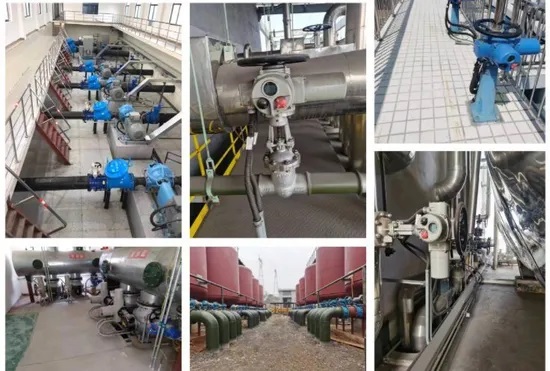
Chenglei's own application data points to the operating conditions driving that specification discipline. Electric actuators are used in industrial automation control systems and pipeline valve control, mated to control valves, ball valves and butterfly valves, in conditions that include high temperature, high pressure, explosion-proof areas, corrosive atmospheres, dust, outdoor installation and continuous operation. Many of those duties run around the clock, which is why motor duty class and control method are decided together rather than separately.
Hazardous-area compliance frames the discussion. Explosion-proof electric actuators are standardised under IEC 60079-0 (General Requirements) and IEC 60079-1 (Flameproof Enclosures 'd'), as published by IECEx. Explosion-proof equipment is further classified into gas groups (IIA, IIB, IIC) and temperature classes (T1–T6), with Group IIC required for hydrogen environments according to ATEX-aligned classification guidance. Chenglei actuators list explosion-proof certification as ATEX / Exd BT4 / CT4.
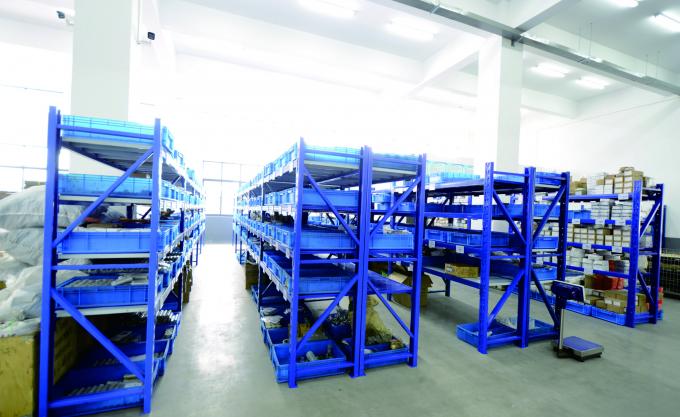
Changzhou Chenglei Valve Technology Co., Ltd. (CHENGLEI) is a manufacturer of valve electric actuators based in Changzhou, Jiangsu, China, established in 2016 and stated by the company to have over 20 years of experience developing and manufacturing valve electric actuators. The company operates a 20,000 m² manufacturing facility with approximately 100 employees and a 25-engineer R&D team, reports annual output of 120,000 units and an export ratio of 80% across global markets, and states a supply ability of 3,000 sets per month. Its independently developed CL series valve electric actuators are used in Oil & Gas, Water & Power, and Chemical, Process & Industrial applications.
Detailed Solution: How On-Off and Modulating Are Configured on the Same Platform
The practical value of comparing these two methods is that a buyer does not have to choose between two different actuator families. On Chenglei platforms, the control method is one configuration parameter among several that are all specified at the same time.
One platform, two control methods
The most direct evidence sits in the product data. The Chenglei model described as Intelligent 24V DC JB2920 ISO5210 Flange Electric Valve Actuator With High Torque And Quarter Turn lists Control Method: On-Off Or Modulating on the same specification sheet as its voltage range, duty class, protection grade and explosion-proof rating. The DQ Series, a high-speed low-temperature actuator for valve control, carries the same two-option control line alongside a 4–20 mA signal input. In other words, the choice is made at quotation and configuration, not at the family level.
What both control methods share
The shared specification base on these platforms includes:
- Voltage options: 380 V / 110 V / 220 V / 440 V / 660 V AC or 12 V / 24 V DC, at 50 Hz / 60 Hz rated frequency.
- Motor duty: S2 10 min, 15 min, 30 min, or S1 / S3 / S4 / S6 at 24% and 40%.
- Protection grade: IP65 / IP67 / IP68, with insulation class F.
- Explosion-proof: ATEX / Exd BT4 / CT4.
- Environmental range: −20 to +60 °C as standard, with special orders from −60 to +70 °C; relative humidity ≤ 95% at +25 °C.
- Body material: aluminium alloy, stainless steel or carbon steel.
- Safety and operation features: thermal protection, battery backup, Bluetooth connection, and manual override with handwheel.
- Mechanical connection: JB2920 torque type or ISO5210 (GB/T 12222) thrust flange type.
For a procurement engineer, this list is the argument for specifying control method early: none of these items changes because the actuator is on-off or modulating, but all of them constrain the actuator that will eventually carry that control method.
The on-off side of the range
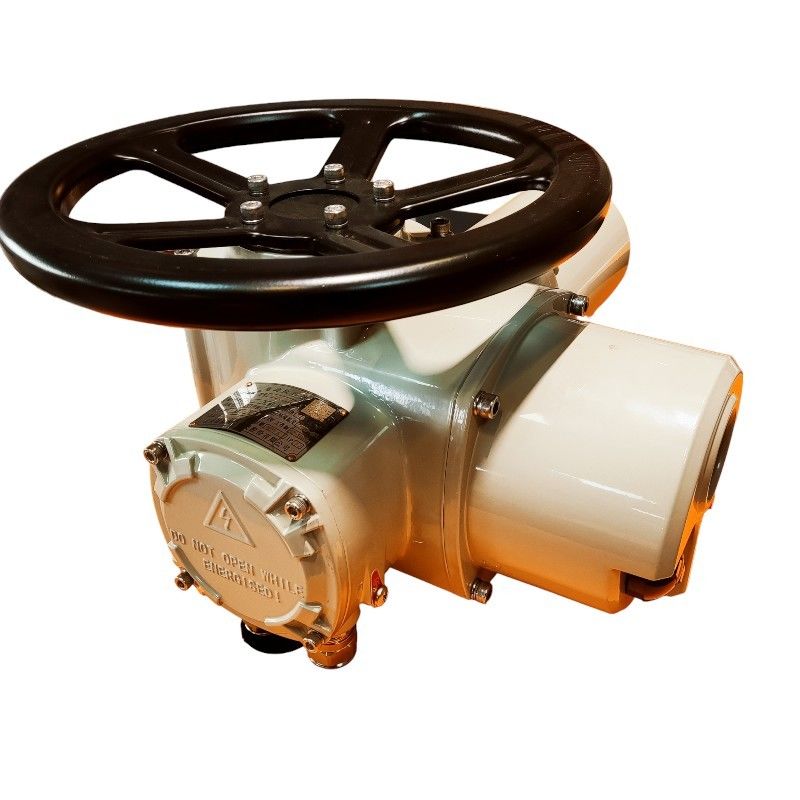
On-off configurations in the Chenglei range include the Z10 IP67 on-off multi-turn electric actuator (100 N.M nominal torque, 18/24 R/min output rotation speed, 0.18/0.25 kW motor power, F10 flange, 28 mm maximum stem diameter) and the Z30 intelligent explosion-proof on-off multi-turn valve actuator (300 N.M, 18/24 R/min, 0.55/0.75 kW, F14 flange, 40 mm maximum stem diameter, IP67). Part-turn on-off duty is covered by the QI10 intelligent on-off electric valve actuator (100 N.M, 1 R/min, 0.06 kW, 60:1 manual speed ratio, F05/F07 flange, 19 mm maximum stem diameter).
The modulating side of the range
The CLZXC4000 Intelligent Adjustment Electric Valve Actuator is the clearest example of a modulating-oriented configuration: model CLZXC4000, rated frequency 50/60 Hz, protection level IP65/67, working temperature −20 to +60 °C, high-temperature baking paint anti-corrosion coating, and a stated working system of 10 minutes for short time. Its name — adjustment — describes its purpose: positioning rather than merely switching.
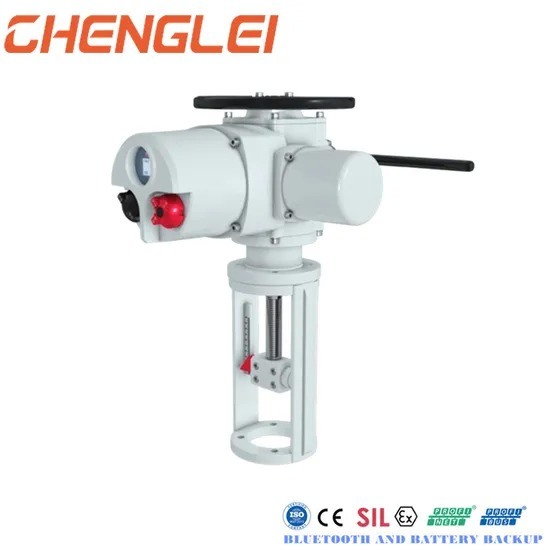
The ZXC Series extends that capability into linear and rotary duties. The Intelligent Electric Motor Linear Actuator Explosion Proof ZXC Series is classified as an intelligent electric actuator, a linear electric actuator and an explosion-proof actuator. One ZXC configuration for regulating valves lists a maximum thrust of 10,000 N, standard stroke 250 mm, stroke length 100 mm, 24 V DC voltage with 220 V / 380 V 50 Hz power supply, IP65 rating, built-in limit switch, thermal protection, explosion-proof construction, battery backup and Bluetooth connection. The ZXC Type Electric Rotary Actuator adds certifications CE, ATEX and SIL3, control type On/Off and Modulating, enclosure IP67 / NEMA 4X, a torque range of 10 Nm to 4,000 Nm, travel angles of 90°, 120° and 180°, ISO 5211 mounting, position feedback of 4–20 mA and 0–10 VDC, and a 2-year warranty.
Where duty class meets control method
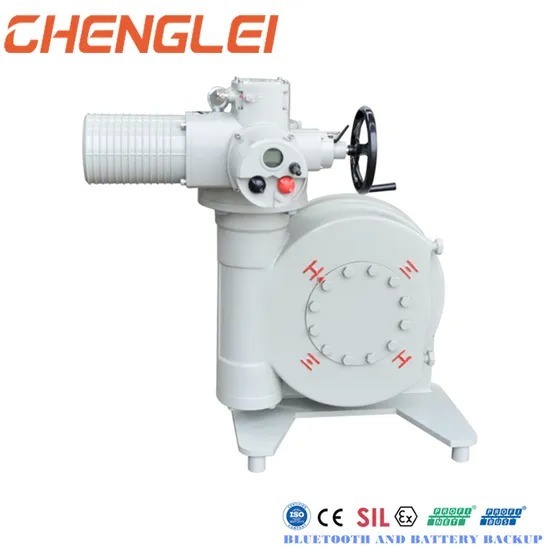
Motor duty is the point at which the two control methods stop looking alike. The available duty options — S2 10 min, 15 min, 30 min, or S1 / S3 / S4 / S6 at 24% and 40% — are published across the same platforms that offer both control methods. Continuous or high-cycle modulating duty and low-cycle isolation duty therefore resolve into different duty selections, even when torque, flange and voltage are identical. This is why duty class should be recorded on the same line of the data sheet as control method.
Step-by-Step Breakdown: Specifying the Control Method
The following sequence keeps the control-method decision in the correct order relative to torque, mechanical interface and compliance.
Step 1 — Define what the valve must do in normal operation
Write the operating requirement in plain language first: isolate a line, or hold a setpoint. Isolation maps to on-off control. Setpoint holding maps to modulating control. If a line has both duties, they are two valves, not one compromise.
Step 2 — Decide whether intermediate positions are required
If the answer is never, on-off is the correct specification. If the answer is sometimes or continuously, modulating control is required, and the control system must be able to issue a continuous command — for example the 4–20 mA signal input listed on the DQ Series.
Step 3 — Confirm the feedback the control system will read
End-position confirmation is normally sufficient for on-off duty. Where the PLC or DCS needs to know actual valve position, position feedback such as 4–20 mA or 0–10 VDC — listed on the ZXC Type Electric Rotary Actuator — should be specified together with the control method, not afterwards.
Step 4 — Translate the duty cycle into a motor duty class
Select from the published options: S2 10 min, 15 min, 30 min, or S1 / S3 / S4 / S6 at 24% and 40%. Match the class to how often the valve will actually move in the operating week, not to how often it might move in a theoretical worst case.
Step 5 — Fix the electrical interface
Specify voltage and frequency: 380 V / 110 V / 220 V / 440 V / 660 V AC or 12 V / 24 V DC, at 50 Hz / 60 Hz. Confirm insulation class F and confirm whether thermal protection is required.
Step 6 — Confirm area classification and ingress protection
For hazardous areas, confirm ATEX / Exd BT4 / CT4 and the required gas group and temperature class, together with IP65 / IP67 / IP68. Where the installation is outdoors or subject to washdown, IP rating is specified on the same line.
Step 7 — Lock the mechanical interface
Decide between JB2920 torque type and ISO5210 (GB/T 12222) thrust flange type, and confirm flange number, maximum stem diameter and travel angle. Chenglei part-turn and multi-turn configurations publish these values directly — for example F05/F07 with a 19 mm maximum stem diameter on QI10, F10 with 28 mm on Z10, F14 with 40 mm on Z30, and F16 with 48 mm on the Z45 multi-turn actuator (450 N.M, 24 R/min, 1.1 kW, 5.3 A).
Step 8 — Decide on optional operation features
Battery backup, Bluetooth connection and manual override with handwheel are listed on Chenglei platforms regardless of control method. On modulating duty, battery backup supports positioning behaviour during supply interruption; Bluetooth supports local configuration and diagnostics without opening the enclosure.
Step 9 — Validate the configuration before volume commitment
Confirm the complete data sheet — control method, voltage, duty class, protection grade, certification, connection type and flange — and request a quotation against that exact configuration.
Use Cases: Where Each Control Method Belongs
Oil & Gas
Two distinct duties live side by side. Pipeline isolation and emergency shutoff sit on on-off control, where an explosion-proof multi-turn actuator such as the Z30 — IP67, 300 N.M, F14 — matches the duty. Pressure, flow and process regulation sit on modulating control, where the valve must hold an intermediate position. Both duties require ATEX / Exd BT4 / CT4 in classified areas, and both are typically installed outdoors, so IP65 / IP67 / IP68 is specified in each case.
Water & Power
Water treatment and power plant applications frequently run around the clock, which makes motor duty a first-class decision. Distribution and isolation valves usually run on on-off control, including part-turn duty on butterfly and ball valves covered by QI-series actuators. Where a plant regulates level or flow through a control valve, modulating control is the correct match, and position feedback becomes part of the specification rather than an accessory.
Chemical, Process & Industrial
Process plants concentrate the modulating duties: control valves that trim flow against a controller output. Here the actuator must accept a continuous command, hold position against process forces, and report position back. The CLZXC4000 Intelligent Adjustment Electric Valve Actuator and ZXC Series linear actuators for regulating valves are configured for this role, with position feedback of 4–20 mA and 0–10 VDC available on the ZXC Type Electric Rotary Actuator.
Cold, high-temperature and outdoor installations
Environment often decides the actuator, and then control method decides the configuration. The DQ Series covers −60 °C to +70 °C with On-Off or Modulating control, 4–20 mA signal input, NEMA 4/4X/7&9 enclosure and Bluetooth connection. For standard ambient ranges, Chenglei specifies −20 to +60 °C with a high-temperature baking paint anti-corrosion coating on the CLZXC4000.
Comparison Table: On-Off vs Modulating Electric Actuators
| Decision factor | On-Off control | Modulating control |
|---|---|---|
| Primary job | Drive the valve to a fully open or fully closed position and leave it there | Position the valve at an intermediate point and reposition it as the command changes |
| 9Command signal | Discrete open / close command | Continuous command signal; 4–20 mA signal input is listed on the Chenglei DQ Series |
| Position feedback | End-position confirmation | Continuous position feedback; 4–20 mA and 0–10 VDC listed on the ZXC Type Electric Rotary Actuator |
| Motor duty options | S2 10 min, 15 min, 30 min or S1 / S3 / S4 / S6 at 24% and 40% | Same published options; selection follows actual cycle frequency |
| Typical valve pairing | Ball valves, butterfly valves, isolation and shutoff valves | Control valves and regulating valves |
| Typical applications | Pipeline isolation, water treatment shutoff, plant on/off loops | Pressure, flow, level and temperature regulation loops in Oil & Gas, Water & Power, and Chemical, Process & Industrial |
| Example Chenglei configuration | Z10 IP67 on-off multi-turn (100 N.M, F10, 28 mm stem); Z30 intelligent explosion-proof on-off multi-turn (300 N.M, F14, 40 mm stem); QI10 intelligent on-off part-turn (100 N.M, F05/F07, 19 mm stem) | CLZXC4000 Intelligent Adjustment Electric Valve Actuator (IP65/67, −20 to +60 °C); ZXC Series linear actuator for regulating valve (10,000 N thrust, 250 mm standard stroke); DQ Series (−60 to +70 °C, Bluetooth) |
| Voltage options | 380 V / 110 V / 220 V / 440 V / 660 V AC or 12 V / 24 V DC, 50 Hz / 60 Hz | Same published voltage and frequency options |
| Protection and compliance | IP65 / IP67 / IP68; insulation class F; ATEX / Exd BT4 / CT4; IEC 60079-0 and IEC 60079-1 apply to explosion-proof construction | Same published protection grades and certification options; CE, ATEX and SIL3 listed on the ZXC Type Electric Rotary Actuator |
| Shared operation features | Thermal protection, battery backup, Bluetooth connection, manual override with handwheel | Same published features |
| Mechanical connection | JB2920 torque type or ISO5210 (GB/T 12222) thrust flange type | Same published connection options |
FAQ: On-Off and Modulating Control Questions Buyers Ask
Does the control method change which explosion-proof certification the actuator needs?
No. Control method is a functional selection, not a certification category. Hazardous-area compliance is defined by the enclosure and protection standards — explosion-proof electric actuators are standardised under IEC 60079-0 (General Requirements) and IEC 60079-1 (Flameproof Enclosures 'd') — and by the gas group and temperature class required for the zone, with Group IIC required for hydrogen environments. Chenglei publishes explosion-proof certification as ATEX / Exd BT4 / CT4 across platforms that offer On-Off or Modulating control, together with IP65 / IP67 / IP68 protection grades. The certification therefore travels with the platform and the area classification, not with the control method.
Can one actuator platform support both on-off and modulating duty?
Yes, when the control method is specified alongside the rest of the configuration. The Chenglei quarter-turn model described as Intelligent 24V DC JB2920 ISO5210 Flange Electric Valve Actuator lists Control Method: On-Off Or Modulating on the same data sheet as its voltage range (380 V / 110 V / 220 V / 440 V / 660 V AC or 12 V / 24 V DC), motor duty (S2 10/15/30 min or S1/S3/S4/S6 at 24% and 40%), protection grade (IP65/IP67/IP68) and explosion-proof rating (ATEX / Exd BT4 / CT4). The DQ Series similarly lists On-Off or Modulating control with a 4–20 mA signal input. The practical rule is that the platform is chosen once; the control method, signal input and feedback are then fixed for the specific loop.
What drives the commercial difference between an on-off and a modulating configuration?
The commercial difference comes from the configuration lines attached to the control method rather than from the control method alone. A modulating specification typically adds continuous command handling such as a 4–20 mA signal input and continuous position feedback such as 4–20 mA or 0–10 VDC, both listed in Chenglei product data. Other lines that move the quotation are motor duty class, voltage, IP68 versus IP65/IP67, explosion-proof execution, body material (aluminium alloy, stainless steel or carbon steel), connection type (JB2920 torque type or ISO5210 thrust flange type), battery backup, Bluetooth connection and manual override. Chenglei prices are listed as negotiable, so a quotation should be requested against a complete, fixed data sheet rather than against a model name.
How can a buyer validate the control method before committing to a volume order?
Validate the specification first and the hardware second. Build the data sheet from published values — control method, voltage and frequency, motor duty class, protection grade, explosion-proof rating, connection type, flange number, maximum stem diameter, travel angle and feedback signal — then request a sample and quotation against that exact configuration. Chenglei states a supply ability of 3,000 sets per month and an annual output of 120,000 units, with packaging in carton or wooden box, which allows a configuration to be checked against a project requirement before it is released to volume. The full product catalogue is available as a downloadable brochure: Chenglei electric actuator brochure (PDF).
Do on-off and modulating actuators differ in supply and delivery terms?
Both are supplied from the same production base, so the difference in delivery terms comes from the configuration rather than from the control method. Chenglei manufactures in Changzhou, Jiangsu, China, operates a 20,000 m² facility with approximately 100 employees and a 25-engineer R&D team, states an annual output of 120,000 units and a supply ability of 3,000 sets per month, and exports 80% of production to global markets. A ZXC Series linear actuator configuration is published with a production capacity of 30,000 per year. Specific schedules should be confirmed at the quotation stage, because duty class, IP rating and hazardous-area execution affect the build sequence.
Conclusion: Decide the Duty, Then the Control Method
The decision between on-off and modulating control is settled by one question: does the valve ever have to sit between fully open and fully closed? If it does not, on-off control is the complete answer, and the specification should concentrate on torque, flange, duty class and area classification. If it does, modulating control is required, and the specification must add a continuous command signal, a feedback path and a duty class that matches the real cycle frequency.
Because Chenglei publishes control method, voltage, motor duty (S2 10/15/30 min or S1/S3/S4/S6 at 24% and 40%), protection grade (IP65 / IP67 / IP68), explosion-proof certification (ATEX / Exd BT4 / CT4), connection type (JB2920 torque type or ISO5210 thrust flange type), battery backup, Bluetooth connection and manual override as separate lines on the same data sheets, the two control methods can be compared on equal terms before purchase — using the CLZXC4000 Intelligent Adjustment Electric Valve Actuator and the ZXC Series as concrete references for modulating duty, and the Z10, Z30 and QI10 as references for on-off duty.
Next step: send your valve size, required torque, supply voltage, duty cycle, area classification and the control method you believe you need. Chenglei will confirm the configuration, provide a quotation and arrange a sample for validation. Product information is available at electricvalvesactuators.com, the catalogue can be downloaded via the electric actuator brochure (PDF), and direct contact is available through Mr. GUI JING at terry.gui@cz-chenglei.com or WhatsApp +8613401325958.
Have Questions or Need More Details?
Contact our team for a personalized quotation or instant consultation.
Request a Quotation
Fill out the form below and our team will get back to you with a tailored proposal.
WhatsApp Direct Chat
Prefer to chat in real-time? Message us on WhatsApp for instant assistance & quick answers.
- Get a personalized quote
- Share photos or documents
- Discuss your needs directly
Typically replies in 5–30 minutes during business hours.