
How to Specify Chenglei Electric Actuators for Oil, Gas, Water, Power & Chemical Projects
How to Specify Chenglei Electric Actuators for Oil, Gas, Water, Power & Chemical Projects
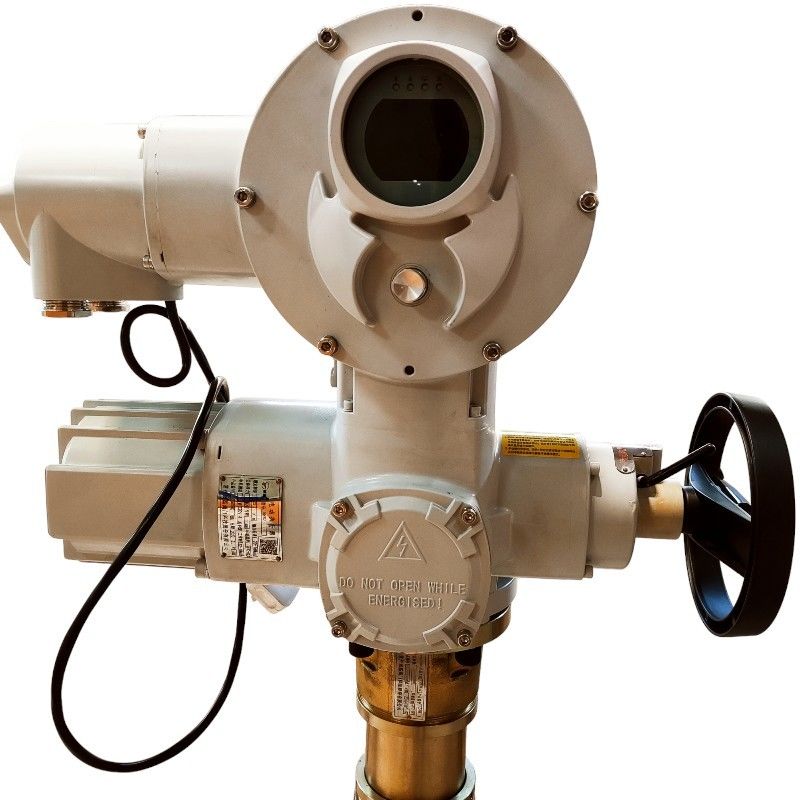
An electric actuator is ordered after the valve, after the piping class, and after the area classification drawing — but it is the component that decides whether the valve actually moves when the control room sends a signal. This guide is written for the engineers and procurement teams who must convert a project specification into a firm actuator order for oil & gas, water & power, or chemical and process duty.
Short answer: a project-ready actuator specification is defined by seven variables — valve and duty type (part-turn or multi-turn, on-off or modulating), torque or thrust rating, body material (Aluminum Alloy, Stainless Steel or Carbon Steel), rated voltage (380V / 110V / 220V / 440V / 660V AC, or 12V / 24V DC), control method (On-Off or Modulating), connection type (JB2920 Torque Type or ISO5210 Thrust Flange Type), and protection / explosion-proof grade (IP65, IP67, IP68 and ATEX-aligned Exd BT4 or CT4). Every step below shows how to fix each variable before the purchase order is released.
The Project Problem: Actuator Faults Usually Start at the Specification Stage
Most field failures blamed on an actuator are not manufacturing failures. They are specification failures that only become visible after commissioning, when the plant is already running and the correction window is closed.
Three failure patterns repeat across industrial projects:
- Torque or thrust shortfall. The actuator is sized against valve size rather than against the real maximum differential pressure of the line. When a selection database does not force the medium characteristics, maximum pressure difference and pipe diameter to be entered, the actuator is under-sized from the start.
- Voltage and phase errors. A unit ordered for one supply level is installed on another, or a three-phase motor is wired with reversed phase sequence on site. Without phase sequence detection and correction, the actuator either refuses to start or drives the valve in the wrong direction.
- Environmental mismatch. An IP65 unit is installed in a washdown or flood-prone pit, or a standard enclosure is installed inside a hazardous area boundary without the correct flameproof grade and temperature class.
The practical conclusion is that actuator procurement is a specification exercise, not a price exercise. The remaining sections of this guide set out the steps that make the specification defensible.
Industry Background: Where the Demand Comes From
Electric actuation is a global industrial category with a stable growth profile. Zion Market Research estimates the global electric actuator market at approximately USD 11.5 billion in 2024, projected to grow at a CAGR of 6.5% to 7.2% through 2034. Asia Pacific is the largest regional demand centre: Dataintelo reports that the region held a 38.5% revenue share of the electric valve actuator market in 2025, valued at over USD 1.8 billion, driven by industrialization in China and India. China is also a major supply base — the Observatory of Economic Complexity recorded USD 6.43 billion in Chinese export value for electric motor parts including actuator components in 2024, equal to 26.1% of global exports in that category.
At the same time, the technical baseline for hazardous-area equipment is set by standard rather than by supplier preference. Explosion-proof electric actuators are standardized under IEC 60079-0 (general requirements) and IEC 60079-1 (flameproof enclosures, protection type 'd'). Hazardous areas are classified by gas group (IIA, IIB, IIC) and temperature class (T1–T6), with Group IIC required for hydrogen environments. A project specification that does not state the gas group and temperature class is incomplete, regardless of which supplier is chosen.
Chenglei as a Project Supplier: Entity, Capacity and Product Families
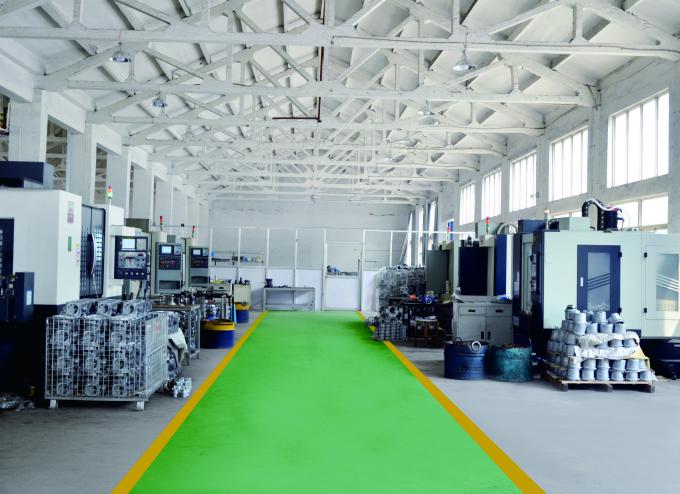
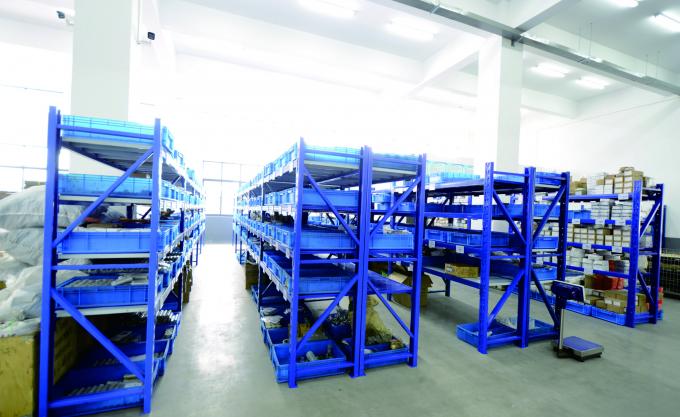
Changzhou Chenglei Valve Technology Co., Ltd. is an electric actuator manufacturer based in Changzhou, Jiangsu Province, China, established in 2016. The company manufactures valve electric actuators as its main product line, exports approximately 80% of its output to global markets, and operates a 20,000 m² facility with around 100 employees, including a 25-engineer R&D team, supported by more than 50 CNC machining centres, CNC lathes and inspection equipment. Annual output is stated at 120,000 units, and factory monthly production capacity is 8,000 units. The independently developed CL series valve electric actuators are applied across oil & gas, water & power, and chemical, process and industrial duty.
For project packages in this guide, two product families are used as application examples:
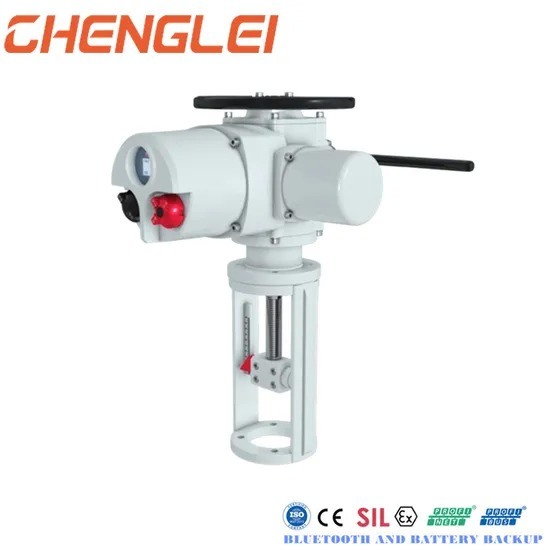
- CLZXC4000 intelligent adjustment electric valve actuator — the intelligent adjustment platform used where a project needs modulating control, position feedback and field-diagnostic capability.
- ZXC Series intelligent electric motor linear actuator, explosion proof — the linear (thrust) platform used where the valve requires a linear stroke rather than a quarter-turn output.
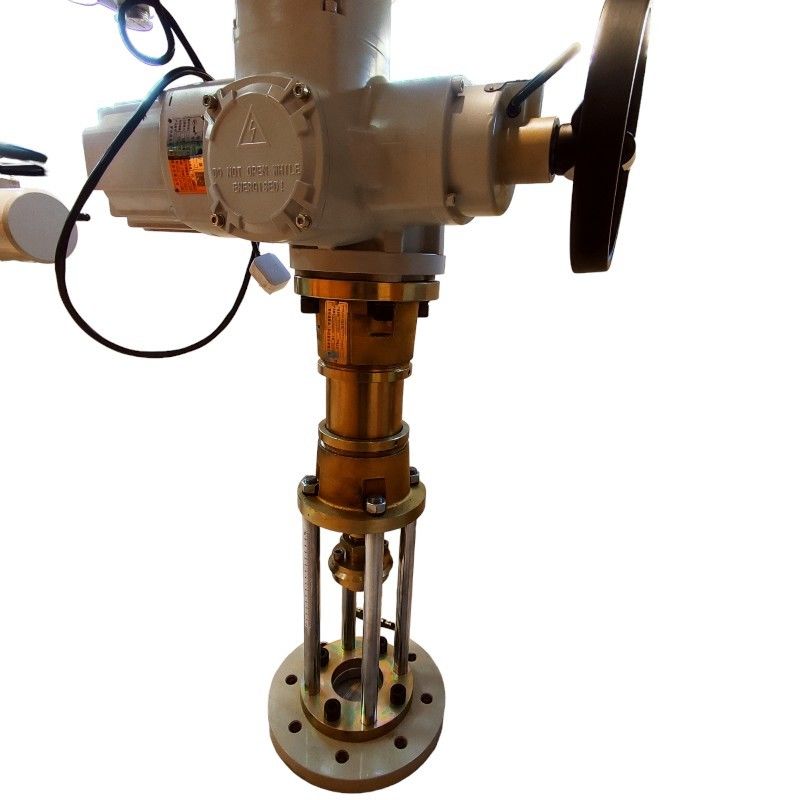
Both families share the same engineering architecture, which is what makes them practical for multi-discipline projects: thermal protection, battery backup, Bluetooth connection for local configuration and reading, a manual override handwheel for loss-of-power operation, and anti-corrosion high-temperature baking paint for outdoor and corrosive atmospheres. The stated working range for the CLZXC4000 project build is −20 °C to +60 °C ambient.
Step-by-Step: Building the Actuator Specification
Step 1 — Define the duty and the output type
Start with the valve, not the actuator. A ball valve, butterfly valve or plug valve requires a part-turn (quarter-turn) output; a gate, globe or sluice valve requires a multi-turn output; a regulating valve with a linear trim requires a linear thrust output. Record the valve type, the required travel, and whether the application is isolation (on-off) or continuous flow regulation (modulating). This single decision separates an Electric Part Turn Actuator requirement from an Electric Multi Turn Actuator or an Intelligent Linear Electric Actuator requirement, and it determines which product family is quoted.
Step 2 — Fix the torque or thrust rating with a safety factor
Size the actuator against the maximum differential pressure the valve will ever see — including upset and test conditions, not only normal operating conditions. A structured selection process forces the medium characteristics, maximum pressure difference and pipe diameter to be entered before an actuator is matched, and applies a safety factor of 1.5 times or more. For large projects or non-standard conditions such as high temperature or explosion-proof areas, the selection should be countersigned by sales, technical and production functions before the order is confirmed. This review step is what prevents an under-torqued actuator from reaching site.
Step 3 — Select the body material against the environment, not the budget
Body material is an environmental decision. Aluminum Alloy is the usual choice for general indoor and sheltered outdoor duty where weight matters during installation and maintenance. Stainless Steel is specified for corrosive atmospheres, coastal sites, chemical plants and washdown areas. Carbon Steel is used where mechanical robustness and structural rigidity are the priority, for example heavy multi-turn applications on large gate valves. The material choice must be written into the specification alongside the paint system: anti-corrosion high-temperature baking paint is applied for outdoor and corrosive service, and it should be listed as a requirement rather than treated as a default finish.
Step 4 — Match the rated voltage to the site power supply
Voltage errors are among the most expensive specification mistakes because they are discovered at commissioning. Confirm the available supply first, then specify: 380V, 110V, 220V, 440V or 660V AC for three-phase and single-phase mains supplies, or 12V DC and 24V DC for DC-powered and remote installations. Two practical controls reduce the risk. First, add voltage level labels and wiring schematics inside the junction box so the field team sees the correct supply at the point of connection. Second, for three-phase asynchronous motors, specify built-in phase sequence detection and automatic correction, so that a reversed live-wire connection on site results in either normal operation or a refusal to start with an error report — never a misdirected valve movement.
Step 5 — Choose the control method: On-Off or Modulating
On-Off control is appropriate for isolation duty: the actuator drives to the full-open or full-close limit and the process does not require intermediate positions. Modulating control is required wherever the valve is part of a control loop and the actuator must hold intermediate positions accurately. The CLZXC4000 intelligent adjustment electric valve actuator is the application example for this duty, and it is specified with absolute encoder position acquisition, continuous torque monitoring and an anti-seizure function. The adjustable dead zone on the intelligent platform is documented as adjustable from 0.5% to 5%, which allows the control loop to be tuned to the process rather than to the actuator.
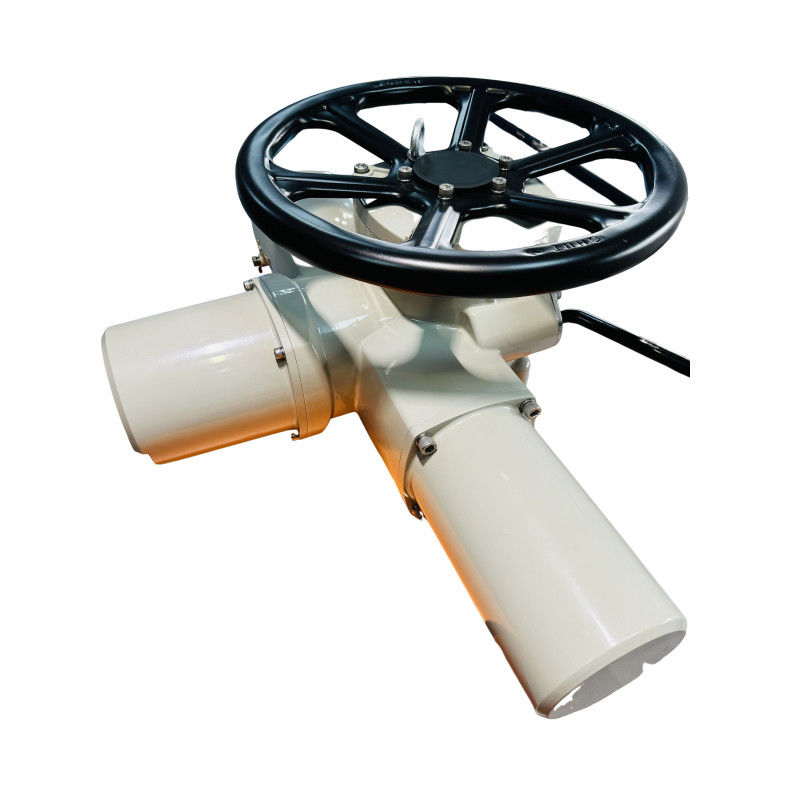
Control intelligence should also be specified at this stage: non-invasive setting through an infrared remote control or rotary knob (so the electrical cover is never opened in the field and moisture and dust cannot enter), self-diagnosis with fault warning, and bus communication over Profinet, Modbus or Profibus where the plant uses a DCS or PLC architecture. Where the installation point is subject to strong vibration, high ambient temperature or high altitude, specify the split-type configuration so the control unit can be mounted separately from the actuator body.
Step 6 — Specify the connection interface: JB2920 or ISO5210
The connection interface must be agreed with the valve supplier before either party manufactures. Two interfaces are used in this project range: the JB2920 Torque Type connection and the ISO5210 Thrust Flange Type connection. The torque type is used where the actuator output is defined by rotational torque and the valve mounting is matched accordingly; the thrust flange type is used where the interface is defined by linear thrust and flange dimensions. Pairing the wrong interface with the valve is a mechanical incompatibility that cannot be corrected in the field, so the interface standard, flange size and stem coupling must appear on the same specification sheet as the actuator model.
Step 7 — Set the ingress protection and explosion-proof grade from the area drawing
Ingress protection and explosion-proof protection are two separate requirements and both must be stated.
- Ingress protection: IP65 for general outdoor and dusty duty, IP67 for temporary immersion risk, and IP68 where the installation point can be submerged — the intelligent platform data documents IP68 sealing for submersion of 48 hours.
- Explosion-proof protection: flameproof Ex d construction with BT4 or CT4 temperature class configurations, matched to the gas group (IIA, IIB or IIC) and temperature class (T1–T6) defined by the site's hazardous area study. IEC 60079-0 and IEC 60079-1 are the governing reference standards for flameproof enclosures.
- Electrical segregation: input and output interfaces using optocoupler isolation, with the mainboard coated for moisture, salt-spray and mould resistance, plus independent internal and external grounding bolts on the enclosure.
Where the plant operates outside the standard −20 °C to +60 °C band, treat temperature as an extension of this step rather than an afterthought: the intelligent actuator platform is documented with a −40 °C to +70 °C range, extendable to −60 °C for specialized low-temperature configurations. Selecting this at the specification stage avoids a re-order later.
Use Cases: Matching the Configuration to the Project
Oil & gas — pipeline isolation and emergency shut-off
Pipeline and terminal duty combines hazardous area classification with high-consequence operation. The specification typically calls for explosion-proof flameproof construction at BT4 or CT4, IP67 or IP68 sealing, and either on-off or modulating control depending on whether the valve is an isolation valve or a control valve. Emergency shut-off duty is a case where the manual override handwheel matters: it provides a defined operating path when power or control signal is unavailable. Continuous torque monitoring and anti-seizure functions protect the actuator when a valve has been static for long periods.
Water & power — pumping stations, treatment and cooling circuits
Water and power projects usually involve large numbers of multi-turn actuators on gate and butterfly valves, distributed across outdoor pits, valve chambers and plant rooms. The dominant risks are moisture ingress, wide ambient temperature variation and unplanned downtime. A typical specification uses IP65 to IP68 sealing depending on the installation point, carbon steel or aluminum alloy bodies, and modulating control only where flow regulation is required. The split-type control unit option is useful where actuators are mounted in high-vibration locations such as pump discharge headers.
Chemical & process — corrosive media and regulated loops
Chemical and process plants combine corrosive atmospheres with tight flow control. Stainless steel bodies and anti-corrosion high-temperature baking paint are the material answer; intelligent modulating control with bus communication (Profinet, Modbus or Profibus) is the control answer, because it removes a large share of field cabling and IO cards and integrates the actuator into the plant DCS for remote monitoring and predictive maintenance. Where process sections are critical — high-temperature digestion, reactor feed, dosing — the actuator is specified with self-diagnosis and fault warning so that degradation is reported before it becomes a trip.
Comparison Table 1: Project Configuration Matrix
| Specification variable | Options available in this range | When to choose it |
|---|---|---|
| Body material | Aluminum Alloy / Stainless Steel / Carbon Steel | Aluminum for general duty and lower installed weight; stainless for corrosive and washdown sites; carbon steel where structural rigidity is the priority. |
| Rated voltage | 380V / 110V / 220V / 440V / 660V AC; 12V / 24V DC | Match the site supply; use DC where remote or DC-backed power is the design basis. |
| Control method | On-Off / Modulating | On-Off for isolation duty; Modulating for control loops requiring intermediate positions. |
| Connection type | JB2920 Torque Type / ISO5210 Thrust Flange Type | Must be agreed with the valve supplier before manufacture; torque output for quarter-turn valves, thrust flange for linear valves. |
| Ingress protection | IP65 / IP67 / IP68 | IP65 for general outdoor duty; IP67 for immersion risk; IP68 where submersion is possible (documented for 48 hours submersion on the intelligent platform). |
| Explosion-proof grade | Exd BT4 / CT4 (ATEX-aligned, IEC 60079 framework) | Mandatory inside hazardous area boundaries; gas group and temperature class set by the area study. |
| Ambient working range | −20 °C to +60 °C (extended platform range −40 °C to +70 °C, extendable to −60 °C) | Confirm the site minimum and maximum ambient at specification stage, not at commissioning. |
| Control architecture | Integral or split-type control unit; bus communication Profinet / Modbus / Profibus | Split type where vibration, high temperature or high altitude applies; bus where the plant integrates actuators with DCS/PLC. |
Comparison Table 2: Intelligent Platform vs Conventional Actuator — Decision Data
| Decision criterion | Conventional actuator | Chenglei intelligent platform (documented data) |
|---|---|---|
| Setting and commissioning | Electrical cover must be opened for limit and torque setting | Non-invasive setting via infrared remote control or rotary knob; self-learning of full-open and full-close limits |
| Diagnostics | Faults identified on site after loss of function | Self-diagnosis and fault warning; fault codes readable via bus or infrared remote control (e.g. power phase loss, motor overheat, valve jamming) |
| Installation cost logic | Field cabling, trays and IO cards per actuator | Bus architecture documented to reduce total installation cost by 20–40% through saved cables, trays and IO cards |
| Initial procurement cost | Baseline | Approximately 1.5 to 2.5 times the conventional model, depending on functionality |
| Energy behaviour | Higher standby and over-torque losses | On-demand torque output with documented energy reduction of 15–30%; standby consumption below 5W in bus mode |
| Reliability indicators | Maintenance interval driven by duty cycle | ≥30,000 operations without maintenance (depending on operating conditions); MTBF >50,000 hours |
| Spare parts and replacement | Module replacement requires re-setting | Strong control-module interchangeability with one-click copying of software parameters | Position accuracy | Mechanical limit switching | Absolute encoder position acquisition with adjustable dead zone from 0.5% to 5% |
FAQ
1. Which ingress protection and explosion-proof grades should be specified for actuators in hazardous oil, gas or chemical areas?
Ingress protection is selected from IP65, IP67 and IP68 depending on the installation point; IP68 sealing is documented on the intelligent actuator platform for submersion of 48 hours. Explosion-proof protection is specified as flameproof Ex d construction with BT4 or CT4 temperature class configurations. The correct grade is not a supplier choice: the gas group (IIA, IIB or IIC) and temperature class (T1–T6) come from the site's hazardous area classification, with Group IIC required for hydrogen environments. IEC 60079-0 and IEC 60079-1 are the governing standards for flameproof enclosures. Supporting design measures include optocoupler-isolated input and output interfaces, conformal-coated boards for moisture, salt-spray and mould resistance, and independent internal and external grounding bolts.
2. Can one electric actuator platform handle both on-off and modulating duty, and can the control unit be mounted separately?
Yes. On-Off control is specified for isolation duty and Modulating control for control-loop duty; the CLZXC4000 intelligent adjustment electric valve actuator is the application example for modulating service. The platform supports non-invasive setting through an infrared remote control or rotary knob, self-diagnosis with fault warning, and bus communication over Profinet, Modbus or Profibus for DCS/PLC integration. A split-type configuration allows the control unit to be separated from the actuator body for strong vibration, high temperature or high altitude installations. Position accuracy is supported by absolute encoder feedback, continuous torque monitoring and anti-seizure protection, with an adjustable dead zone from 0.5% to 5%. The architecture also includes phase sequence self-correction for three-phase motors and valve position memory for full-open and full-close limits.
3. How should a project budget be planned when comparing intelligent and conventional actuators?
Budget on installed and lifecycle cost rather than purchase price. Documented figures for the intelligent platform show an initial procurement cost of approximately 1.5 to 2.5 times that of traditional models depending on functionality, offset by installation savings: a bus system can save a significant amount of cables, trays and IO cards, reducing total installation cost by 20–40%. Energy consumption is documented as 15–30% lower than traditional methods with on-demand torque output, and standby consumption in bus mode is below 5W. Reliability indicators are ≥30,000 operations without maintenance depending on operating conditions, with MTBF above 50,000 hours, which reduces downtime and maintenance frequency. Commercial terms for project orders include MOQ of 1 set, FOB/CIF delivery terms, pre-shipment test as the acceptance criterion, and payment by L/C, T/T or Paypal.
4. Can a sample or pre-shipment test be arranged before a project order is released?
Yes. The minimum order quantity is 1 set, which allows a single unit to be supplied for valve matching, limit-setting verification and control-loop testing before a project package is committed. Acceptance is based on pre-shipment testing, so the unit is verified against its configuration before dispatch rather than after arrival. For repeat configurations, parameters can be copied to replacement control modules with one click, which keeps the validation result transferable to later batches.
5. What production capacity, packaging and delivery support are available for project schedules?
Changzhou Chenglei Valve Technology Co., Ltd. operates a 20,000 m² facility in Changzhou, Jiangsu, China with around 100 employees and a 25-engineer R&D team, stating annual output of 120,000 units and a factory monthly production capacity of 8,000 units. Project shipments are packed in carton or wooden box packaging as required by the order. Delivery terms are FOB or CIF, with MOQ of 1 set and payment by L/C, T/T or Paypal. For a specification review, quotation or sample request, contact Mr. GUI JING at terry.gui@cz-chenglei.com or WhatsApp +8613401325958, and download the full product catalogue here: Chenglei electric actuator product brochure.
Conclusion
Specifying an electric actuator for an oil, gas, water, power or chemical project is a sequence, not a comparison of prices. Fix the duty and output type, size the torque or thrust with a safety factor, select the body material against the environment, match the voltage to the site supply, choose On-Off or Modulating control, lock the JB2920 torque or ISO5210 thrust flange interface with the valve supplier, and set the IP and explosion-proof grades from the area drawing. When each variable is written down before the order is placed, the actuator is no longer a risk item at commissioning.
Chenglei supports this process with a documented product platform — thermal protection, battery backup, Bluetooth configuration, manual override handwheel and anti-corrosion high-temperature baking paint across the CLZXC4000 intelligent adjustment electric valve actuator and the ZXC Series intelligent electric motor linear actuator explosion proof — backed by stated manufacturing capacity of 8,000 units per month and carton or wooden box packaging for project deliveries.
Request a configuration review or sample
Send your valve data sheet, area classification and supply voltage and the Chenglei team will return a matched actuator configuration for your project package. MOQ is 1 set; acceptance is based on pre-shipment test; delivery terms are FOB/CIF; payment by L/C, T/T or Paypal.
Website: www.electricvalvesactuators.com
Email: terry.gui@cz-chenglei.com | WhatsApp: +8613401325958
Catalogue: Download the Chenglei electric actuator brochure (PDF)
Have Questions or Need More Details?
Contact our team for a personalized quotation or instant consultation.
Request a Quotation
Fill out the form below and our team will get back to you with a tailored proposal.
WhatsApp Direct Chat
Prefer to chat in real-time? Message us on WhatsApp for instant assistance & quick answers.
- Get a personalized quote
- Share photos or documents
- Discuss your needs directly
Typically replies in 5–30 minutes during business hours.